Islamic Jizya: Fact and Fiction

The Islamic State demands that Christian "infidels" pay jizya, a per capita tax on non-Muslims sanctified by Islamic law, or forfeit their lives.
|
Muslim demands for non-Muslim "infidels" to pay jizya on pain of death are growing, even as the West fluctuates between having no clue what jizya is and thinking that jizya is an example of "tolerance" in Islam.
In the video where the Islamic State slaughters some 30 Christian Ethiopians in Libya last April, the spokesman repeatedly pointed out that payment of jizya (which the impoverished Ethiopian migrant workers could not render, nor the 21 Copts before them) is the only way for Christians around the world to safeguard their lives:
But whoever refuses [to pay jizya] will see nothing from us but the edge of a spear. The men will be killed and the children will be enslaved, and their wealth will be taken as booty. This is the judgment of Allah and His Messenger.
When the Islamic State invaded ancient Christian regions around the Ninevah Plain last June, it againdeclared: "We offer them [Assyrian Christians] three choices: Islam; the dhimma contract—involving payment of jizya; if they refuse this they will have nothing but the sword."

Palestinian preacher 'Issam Amira recently urged his followers to wage jihad against non-Muslims "when they refuse to convert to Islam or refuse to pay jizya."
|
The Islamic State—which most Western politicians ludicrously insist "has nothing to do with Islam"—is not alone in calling for jizya from Christian "infidels." In 2002, Saudi Sheikh Muhammad bin Abdul Rahman, discussing the Muslim prophet's prediction that Islam will eventually conquer Rome, said, "We will control the land of the Vatican; we will control Rome and introduce Islam in it. Yes, the Christians . . . will yet pay us the jizya, in humiliation, or they will convert to Islam."
And in a video recently posted, Sheikh 'Issam Amira appears giving a sermon in Al Aqsa Mosque where he laments that too many Muslims think jihad is only for defense against aggressors, when in fact Muslims are also obligated to wage offensive jihad against non-Muslims:
When you face your pagan enemy, call them—either to Islam, jizya, or seek Allah's help and fight them. Even if they do not fight [or initiate hostilities], fight them!... Fight them! When? When they fight you? No, when they refuse to convert to Islam or refuse to pay jizya.... Whether they like it or not, we will subjugate them to Allah's authority.
In short, if the Islamic State is enforcing jizya on "infidels," demands for its return are on the increase all around the Muslim world. Put differently, if Abu Shadi, an Egyptian Salafi leader, once declared that Egypt's Christians "must either convert to Islam, pay jizya, or prepare for war," Dr. Amani Tawfiq, a female professor at Egypt's Mansoura University, once said that "If Egypt wants to slowly but surely get out of its economic situation and address poverty in the country, the jizya has to be imposed on the Copts."
The Doctrine and History of Jizya
So what exactly is jizya? The word jizya appears in Koran 9:29, in an injunction that should be familiar by now:
Fight those among the People of the Book [Christians and Jews] who do not believe in Allah nor the Last Day, nor forbid what Allah and his Messenger have forbidden, nor embrace the religion of truth, until they pay the jizya with willing submission and feel themselves subdued(emphasis added).
In the hadith, the Messenger of Allah, Muhammad, regularly calls on Muslims to demand jizya of non-Muslims:
If they refuse to accept Islam, demand from them the jizya. If they agree to pay, accept it from them and hold off your hands. If they refuse to pay jizya, seek Allah's help and fight them.
The second "righteous caliph," Omar al-Khattab, reportedly said that any conquered "infidel" who refuses to convert to Islam "must pay the jizya out of humiliation and lowliness. If they refuse this, it is the sword without leniency."
This theme of non-Muslim degradation appears regularly in the commentaries of Islam's authorities. According to the Medieval Islamic Civilization Encyclopedia,
[Muslim] jurists came to view certain repressive and humiliating aspects of dhimma as de rigueur. Dhimmis [subjugated non-Muslim Christians and Jews] were required to pay the jizya publicly, in broad daylight, with hands turned palm upward, and to receive a smart smack on the forehead or the nape of the neck from the collection officer.
Some of Islam's jurists mandated a number of other humiliating rituals at the time of jizya payment, including that the presiding Muslim official slap, choke, and in some cases pull the beard of the paying dhimmi, who might even be required to approach the official on all fours, in bestial fashion.
Conquered non-Muslims were required to purchase their lives, which were otherwise forfeit to their Muslim conquerors.
|
The root meaning of the Arabic word "jizya" is simply to "repay" or "recompense," basically to "compensate" for something. According to the Hans Wehr Dictionary, the standard Arabic-English dictionary, jizya is something that "takes the place" of something else, or "serves instead."
Simply put, conquered non-Muslims were to purchase their lives, which were otherwise forfeit to their Muslim conquerors, with money. Instead of taking their lives, they took their money. As one medieval jurist succinctly put it, "their lives and their possessions are only protected by reason of payment of jizya."
Past and increasingly present, Muslims profited immensely by exacting jizya from conquered peoples.
For instance, Amr bin al-As, the companion of Muhammad who conquered Christian Egypt in the early 640s, tortured and killed any Christian Copt who tried to conceal his wealth. When a Copt inquired of him, "How much jizya are we to pay?" the Islamic hero replied,
If you give me all that you own—from the ground to the ceiling—I will not tell you how much you owe. Instead, you [the Christian Copts] are our treasure chest, so that, if we are in need, you will be in need, and if things are easy for us, they will be easy for you.
Yet even that was not enough. Caliph Uthman later chided Amr bin al-As because another governor of Egypt had managed to increase the caliphate's treasury double what Amr had. In the words of Uthman, the "milk camels [Egypt's Christians, that is] . . . yielded more milk." Years later, yet another caliph, Suleiman ibn Abdul Malik, wrote to the governor of Egypt advising him "to milk the camel until it gives no more milk, and until it milks blood."
| Caliph Suleiman ibn Abdul Malik described his Christian subjects as a beast to be milked "until it gives no more milk." |
Little wonder Egypt went from being almost entirely Christian in the seventh century to today having a mere 10%—and steadily dwindling, thanks to ongoing persecution—Christian minority.
Related to the idea of institutionalized jizya is the notion that non-Muslims are fair game to plunder whenever possible. The jizya entry in theEncyclopaedia of Islam states that "with or without doctrinal justification, arbitrary demands [for money] appeared at times." Even that medieval traveler, Marco Polo, whose chronicles appear impartial, made aninteresting observation concerning the Muslims in Tauris (modern day Iraq) in the thirteenth century:
According to their doctrine [Islam], whatever is stolen or plundered from others of a different faith, is properly taken, and the theft is no crime; whilst those who suffer death or injury by the hands of Christians [during the course of a plunder-driven raid], are considered as martyrs.... These principles are common to all Saracens [Muslims].
All this is echoed in recent times by the words of Sheikh Abu Ishaq al-Huwaini, spoken a few years ago, concerning what the Muslim world should do to overcome its economic problems:
If only we can conduct a jihadist invasion at least once a year or if possible twice or three times, then many people on earth would become Muslims. And if anyone prevents our dawa [invitation to conversion] or stands in our way, then we must kill or take them as hostage and confiscate their wealth, women and children. Such battles will fill the pockets of the Mujahid [holy warrior] who can return home with 3 or 4 slaves, 3 or 4 women and 3 or 4 children. This can be a profitable business if you multiply each head by 300 or 400 dirham. This can be like financial shelter whereby a jihadist, in time of financial need, can always sell one of these heads.
So it was for well over a millennium: Muslim rulers and mobs extorted money from "infidels" under their sway as a legitimate way to profit.
Much of this financial fleecing came to an end thanks to direct European intervention. Beginning in the mid-nineteenth century, one Muslim region after another abolished the jizya and gave non-Muslims unprecedented rights—originally to appease Western powers, later in emulation of Western governance. The Ottoman Empire's Hatt-i Humayun decree of 1856 abolished the jizya in many Ottoman-ruled territories. Elsewhere in the Muslim world, the jizya was gradually abolished wherever Western powers were present.

British Muslim cleric Anjem Choudary describes his government welfare payments as jizya taken "from the kafir (infidel)."
|
Today, however, as Muslims reclaim their Islamic heritage—often to the approval and encouragement of a West, now under the spell of "multiculturalism"—jizya, whether institutionalized as under the Islamic State, or as a rationale to plunder infidels, is back.
Even in the West, in 2013, a UK Muslim preacher who was receiving more than 25,000 pounds annually in welfare benefits referred to British taxpayers as "slaves," and explained:
"We take the jizya, which is our haq [Arabic for "right"], anyway. The normal situation by the way is to take money from the kafir[infidel], isn't it? So this is the normal situation. They give us the money—you work, give us the money, Allahu Akhbar ["Allah is Great"]. We take the money."
Academic Lies about Jizya
Yet if Muslims—from Islamic State jihadis to Egyptian university professors—know the truth about jizya, the West is today oblivious, thanks to its leading authorities on Islam: Western academics and other "experts" and talking heads.
Consider the following excerpt from John Esposito, director of the Prince Alwaleed Center for Muslim-Christian Understanding at Georgetown University and a widely acknowledged go-to source for anything Islamic:
In many ways, local populations [Christians, Jews, and others] found Muslim rule more flexible and tolerant than that of Byzantium and Persia. Religious communities were free to practice their faith to worship and be governed by their religious leaders and laws in such areas as marriage, divorce, and inheritance. In exchange, they were required to pay tribute, a poll tax (jizya) that entitled them to Muslim protection from outside aggression and exempted them from military service. Thus, they were called the "protected ones" (dhimmi). In effect, this often meant lower taxes, greater local autonomy ... (emphasis added)
Despite the almost gushing tone related to Muslim rule, the idea that jizya was extracted in order to buy "Muslim protection from outside aggression" is an outright lie. Equally false is Esposito's assertion that jizya was paid to "exempt them [non-Muslims] from military service"—as if conquering Muslims would even want or allow their conquered "infidel" subjects to fight alongside them in the name of jihad (holy war against infidels) without first converting to Islam.
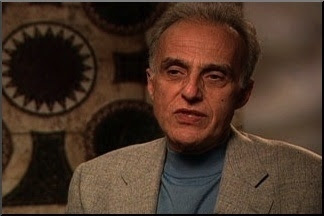
John Esposito argues that paying jizya was a blessing for non-Muslims that "entitled them to Muslim protection from outside aggression."
|
Yet these two myths—that jizya was for "Muslim protection from outside aggression" and exemption from military service—are now widely accepted. In "Nothing 'Islamic' About ISIS, Part Two: What the 'Jizya' Really Means," one Hesham A. Hassaballa recycles these fabrications on BeliefNet by quotingSohaib Sultan, Princeton University's Muslim chaplain, who concludes: "Thus, jizyah is no more and no less than an exemption tax in lieu of military service and in compensation for the 'covenant of protection' (dhimmah) accorded to such citizens by the Islamic state."
In reality and as demonstrated above via the words of a variety of authoritative Muslims, past and present, jizya was, and is indeed, protection money—though protection, not from outsiders, as Esposito and others claim, but from surrounding Muslims themselves. Whether it is the first caliphate from over a millennium ago or whether it is the newest caliphate, the Islamic State, Muslim overlords continue to deem the lives of their "infidel" subjects forfeit unless they purchase it, ransom it with money. Put differently, the subjugated infidel is a beast to be milked "until it gives no more milk and until it milks blood," to quote the memorable words of an early caliph.
There is nothing humane, reasonable, or admirable about demands for jizya from conquered non-Muslim minorities, as the academics claim. Jizya is simply extortion money. Its purpose has always been to provide non-Muslims with protection from Muslims: pay up, or else convert to Islam, or else die.
And it is commanded in both the Koran and Hadith, the twin pillars of Islam. In short, jizya is yet another ugly fact of Islam—add to offensive jihad, imperialism, misogyny, slavery, etc.—one that, distort as they may, the academics cannot whitewash away, even as the world stands idly by watching its resumption in the twenty-first century.
Note: Most quotations not hyperlinked are sourced from Crucified Again: Exposing Islam's New War on Christians. Full references can be found there.
Raymond Ibrahim is a Shillman Fellow at the David Horowitz Freedom Center and a Judith Friedman Rosen Writing Fellow at the Middle East Forum. He is the author of
Crucified Again: Exposing Islam's New War on Christians(2013) and The Al Qaeda Reader (2007).
-----
If you found this post interesting or informative, please  it below. Thanks!
it below. Thanks!