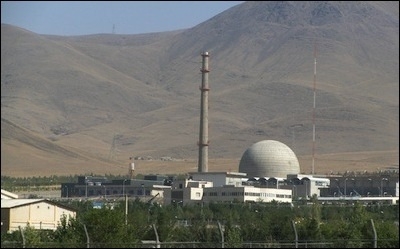
Iran's nuclear facility in Arak. Tehran's quest for nuclear weapons is, perhaps, the foremost threat to Middle Eastern stability, if not to world peace, in the foreseeable future. President Obama's policies have allowed Iran to move ever closer to producing nuclear weapons.
|
Showing posts with label Efraim Karsh. Show all posts
Showing posts with label Efraim Karsh. Show all posts
Tuesday, February 23, 2016
MEQ: Efraim Karsh: Obama's Middle East Delusions
The following by Efraim Karsh is reposted here with the permission of The Middle East Forum:
As the only person to have won the Nobel Peace Prize on the basis of sheer hope rather than actual achievement, Barack Hussein Obama could be expected to do everything within his power to vindicate this unprecedented show of trust. Instead he has presided over a clueless foreign policy that has not only exacerbated ongoing regional conflicts but made the world a far more dangerous place. Nowhere has this phenomenon been more starkly demonstrated than in the Middle East where the Nobel laureate has abetted Tehran's drive for regional hegemony and brought the regime within a stone's throw of nuclear weapons; driven Iraq and Libya to the verge of disintegration; expedited the surge of Islamist terrorism; exacerbated the Syrian civil war and its attendant refugee problem; made the intractable Palestinian-Israeli conflict almost irresolvable; and plunged Washington's regional influence and prestige to unprecedented depths,[1] paving the road in grand style to Russia's resurgence.


Monday, March 03, 2014
Middle East Quarterly Spring 2014: Efraim Karsh on The Real Enemies of the Palestinians
The following by Efraim Karsh is reposted here with permission of Middle East Forum:
For most of the twentieth century, inter-Arab politics were dominated by the doctrine of pan-Arabism, postulating the existence of "a single nation bound by the common ties of language, religion and history. … behind the facade of a multiplicity of sovereign states";[1] and no single issue dominated this doctrine more than the "Palestine question" with anti-Zionism forming the main common denominator of pan-Arab solidarity and its most effective rallying cry. But the actual policies of the Arab states have shown far less concern for pan-Arab ideals, let alone for the well-being of the Palestinians, than for their own self-serving interests. Indeed, nothing has done more to expose the hollowness of pan-Arabism than its most celebrated cause.
 |
| Efraim Karsh |
Thursday, January 30, 2014
Efraim Karsh: Michael Oren Misunderstands the Obstacle to Peace
Michael Oren Misunderstands the Obstacle to Peace
|
| Efraim Karsh |
In a recent article on CNN's website, the former Israeli ambassador to the United States argued that in the absence of a two-state solution, "One solution could be a unilateral Israeli withdrawal from Palestinian population centers in the West Bank." This, he reasoned, would allow Israel to "end the occupation of the Palestinians, preserve its security, and perhaps lay new foundations for peace."

U.S. Secretary of State John Kerry chats with Michael Oren at Israel's Ben Gurion International Airport, on April 9, 2013. (Image source: U.S. State Department)
|
But this precisely what Israel did some 20 years ago.
Tuesday, October 22, 2013
MEQ December 2000: Efraim Karsh: Why the Middle East Is So Volatile
The following by Efraim Karsh is reposted here with permission of Middle East Forum:
In the four centuries before World War I, the Middle East was a singularly unchanging place. Since that time, it has been perhaps the most hyperactive of regions. Why this dramatic change? When scholars debate the reasons for twentieth-century volatility, they usually point to outside powers. Efraim Karsh turns this equation on its head; then three leading analysts reply to his argument.
The Editors
Since its formation in the wake of World War I, the contemporary Middle Eastern system based on territorial states has been under sustained assault. In past years, the foremost challenge to this system came from the doctrine of pan-Arabism (or qawmiya ), which sought to "eliminate the traces of Western imperialism" and unify the "Arab nation," and the associated ideology of Greater Syria (or Suriya al-Kubra), which stresses the territorial and historical indivisibility of most of the Fertile Crescent. Today, the leading challenge comes from Islamist notions of a single Muslim community (the umma ). Intellectuals and politicians, denouncing the current system as an artificial creation of Western imperialism at variance with yearnings for regional unity, have repeatedly urged its destruction. National leaders—from Gamal Abdel Nasser to Ayatollah Ruhollah Khomeini to Saddam Husayn—have justified their interference in the affairs of other states by claiming to pursue that unity. Yet the system of territorial states has proven extremely resilient.
Why the Middle East Is So Volatile
by Efraim Karsh
Middle East Quarterly
December 2000, pp. 13-22
Middle East Quarterly
December 2000, pp. 13-22
In the four centuries before World War I, the Middle East was a singularly unchanging place. Since that time, it has been perhaps the most hyperactive of regions. Why this dramatic change? When scholars debate the reasons for twentieth-century volatility, they usually point to outside powers. Efraim Karsh turns this equation on its head; then three leading analysts reply to his argument.
The Editors
|
| Efraim Karsh |
Sunday, August 11, 2013
Efraim Karsh On The Truth Behind The Myths Fabricated By and About "Lawrence of Arabia"
The following by Efraim Karsh is reposted here with permission of Middle East Forum:
by Efraim Karsh
The Wall Street Journal
August 9, 2013
http://www.meforum.org/3577/lawrence-of-arabia-fiction
The modern Middle East was born when the European powers exploited the declining Ottoman Empire's entry into World War I to gobble up its lands. They did so by duping naive Arab nationalists to rise against their Ottoman suzerain and then cheated the Arabs of the fruits of their uprising.
So goes the popular narrative about the origins of the region's troubles. It's an emotionally gripping tale, but it's also the inverse of truth. It wasn't British officials but a Meccan potentate, Sharif Hussein ibn Ali of the Hashemite family, who in the summer of 1915 hatched the idea of overthrowing the Ottoman Empire. Impressed by Hussein's promises to raise the Ottomans' Arab subjects in revolt, Sir Arthur Henry McMahon, the British high commissioner in Egypt, tentatively accepted Hussein's vision of an Arab successor empire and facilitated the revolt that began in June 1916.
Hussein never came close to fulfilling his end of the bargain.
Seven Pillars of Fiction
by Efraim Karsh
The Wall Street Journal
August 9, 2013
http://www.meforum.org/3577/lawrence-of-arabia-fiction
|
| Efraim Karsh |
So goes the popular narrative about the origins of the region's troubles. It's an emotionally gripping tale, but it's also the inverse of truth. It wasn't British officials but a Meccan potentate, Sharif Hussein ibn Ali of the Hashemite family, who in the summer of 1915 hatched the idea of overthrowing the Ottoman Empire. Impressed by Hussein's promises to raise the Ottomans' Arab subjects in revolt, Sir Arthur Henry McMahon, the British high commissioner in Egypt, tentatively accepted Hussein's vision of an Arab successor empire and facilitated the revolt that began in June 1916.
Hussein never came close to fulfilling his end of the bargain.
Thursday, January 10, 2013
Turkey's Unacknowledged Genocide Of Armenia
The following by Efraim Karsh is reposted here with the permission of Middle East Forum:
Ankara's Unacknowledged Genocide
Bernard Lewis went a significant step further, ascribing the wholesale violence attending the collapse of the Ottoman Empire to attempts to reform its Islamic sociopolitical order. "The classical Ottoman Empire enabled a multiplicity of religious and ethnic groups to live side by side in mutual tolerance and respect, subject only to the primacy of Islam and the supremacy of the Muslims," he wrote. "The liberal reformers and revolutionaries who abolished the old order and proclaimed the constitutional equality of all Ottoman citizens led the Ottoman Empire into the final bitter and bloody national struggles—the worst by far in the half-millennium of its history."[2]And Edward Said, in an exceptional display of unanimity with his intellectual foe, was similarly effusive. "What they had then seems a lot more humane than what we have now," he argued. "Of course, there were inequities. But they lived without this ridiculous notion that every millet has to have its own state."[3]
Ankara's Unacknowledged Genocide
Turkey, Past and Future
It is commonplace among Middle East scholars across the political spectrum to idealize the Ottoman colonial legacy as a shining example of tolerance. "The multi-ethnic Ottoman Turkish Empire," wrote American journalist Robert Kaplan, "was more hospitable to minorities than the uni-ethnic democratic states that immediately succeeded it … Violent discussions over what group got to control which territory emerged only when the empire came to an end, after World War I."[1]
 The ethnic cleansing of Turkish Armenia was accomplished in a variety of ways including deportations and outright massacres. Here, Armenian deportees struggle to survive in makeshift tents erected in the Syrian desert to which they were deported in 1915. |
Even Elie Kedourie, whose view of Ottoman colonialism was far less sentimental, could see some advantages in the empire's less than perfect sociopolitical order: "Ottoman administration was certainly corrupt and arbitrary, but it was ramshackle and inefficient and left many interstices by which the subject could hope to escape its terrors, and bribery was a traditional and recognized method of mitigating severities and easing difficulties."[4]
While there is no denying the argument's widespread appeal, there is also no way around the fact that, in almost every particular, it is demonstratively wrong.
Sunday, January 06, 2013
Efraim Karsh On The Israeli-Arab Intifadas
The following by Efraim Karsh is reposted here with permission:
Israel's Arabs: Deprived or Radicalized?
by Efraim Karsh
Israel Affairs
January 2013, pp. 1-19
Israel Affairs
January 2013, pp. 1-19
October 1, 2000, was a watershed in Arab-Jewish relations in the state of Israel. On that day, as most Israelis were celebrating the Jewish new year, their Arab compatriots unleashed a tidal wave of violence in support of the 'al-Aqsa intifada', an all out war of terror launched by Yasser Arafat's Palestinian Authority a couple of days earlier.
For full ten days, Israeli Arabs blocked several main roads, cutting off Jewish localities and forcing some of them to defend against armed assaults by neighbours with whom they had maintained cordial relations for decades. Scores of Jewish families spending the holiday season in the Galilee found themselves attacked by frenzied Arab mobs wielding Molotov cocktails, ball bearings in slingshots, stones, even firearms. Stores, post offices, and other public places were ransacked as rioters clashed with police. Forests were set ablaze. In Nazareth, thousands of Arabs marched in the streets chanting, 'With our souls and our blood we will redeem Palestine'. Jaffa and Haifa, the showcases of Arab-Jewish coexistence, were rocked by violence and vandalism.
Tuesday, October 11, 2011
Efraim Karsh: The revisionist history of Sari Nusseibeh
by Efraim Karsh
The Jerusalem Post
October 11, 2011
Sari Nusseibeh has done it again. In an article titled "Why Israel Can't be a 'Jewish State,'" published on the Jewish New Year of all dates, the supposedly moderate president of al-Quds University goes to great lengths to explain why Jews, unlike any other nation on earth, are undeserving of statehood.
"[T]he idea of a 'Jewish State' is logically and morally problematic because of its legal, religious, historical and social implications," he wrote. "The implications of this term therefore need to be spelled out, and we are sure that once they are, most people – and most Israeli citizens, we trust – will not accept these implications."
Not that this should have come as a surprise. For decades, Nusseibeh has tirelessly advanced the "one-state solution" – a euphemistic formula that proposes the replacement of Israel by a country, theoretically comprising the whole of historic Palestine, in which Jews will be reduced to the status of a permanent minority.
Monday, October 01, 2007
Who Is Responsible For The Palestinian Economy
Noah Pollak writes that Palestinian terrorism has of course taken its toll:
And will continue to blame Israel, instead of itself.

The World Bank report details how terribly the Palestinians have damaged themselves. Since the start of the terror war in 1999, per capita GDP has shrunk by one-third; “GDP is being increasingly driven by government and private consumption from remittances and donor aid, while investment has fallen to exceedingly low levels”; public sector employment has increased by 60 percent, as “workers have been hired as part of a trend to bolster political support”; already-low private investment decreased by over 15 percent between 2005 and 2006; and on, through a litany of indicators of economic decrepitude.That of course is nothing new--though of course Israel is more likely to be blamed than the Palestinian Arabs themselves. This tends to obscure--if not outright ignore--what Palestinian Arabs were able to achieve under the Israeli "occupation." As Efraim Karsh recounts:
The larger part, still untold in all its detail, is of the astounding social and economic progress made by the Palestinian Arabs under Israeli "oppression." At the inception of the occupation, conditions in the territories were quite dire. Life expectancy was low; malnutrition, infectious diseases, and child mortality were rife; and the level of education was very poor. Prior to the 1967 war, fewer than 60 percent of all male adults had been employed, with unemployment among refugees running as high as 83 percent. Within a brief period after the war, Israeli occupation had led to dramatic improvements in general well-being, placing the population of the territories ahead of most of their Arab neighbors.Currently, Palestinian Arabs are doomed to fail to return to their previous levels of success--due to the attitude of the very people who claim to want to help. Pollak writes:
In the economic sphere, most of this progress was the result of access to the far larger and more advanced Israeli economy: the number of Palestinians working in Israel rose from zero in 1967 to 66,000 in 1975 and 109,000 by 1986, accounting for 35 percent of the employed population of the West Bank and 45 percent in Gaza. Close to 2,000 industrial plants, employing almost half of the work force, were established in the territories under Israeli rule.
During the 1970's, the West Bank and Gaza constituted the fourth fastest-growing economy in the world-ahead of such "wonders" as Singapore, Hong Kong, and Korea, and substantially ahead of Israel itself. Although GNP per capita grew somewhat more slowly, the rate was still high by international standards, with per-capita GNP expanding tenfold between 1968 and 1991 from $165 to $1,715 (compared with Jordan's $1,050, Egypt's $600, Turkey's $1,630, and Tunisia's $1,440). By 1999, Palestinian per-capita income was nearly double Syria's, more than four times Yemen's, and 10 percent higher than Jordan's (one of the better off Arab states). Only the oil-rich Gulf states and Lebanon were more affluent.
Under Israeli rule, the Palestinians also made vast progress in social welfare. Perhaps most significantly, mortality rates in the West Bank and Gaza fell by more than two-thirds between 1970 and 1990, while life expectancy rose from 48 years in 1967 to 72 in 2000 (compared with an average of 68 years for all the countries of the Middle East and North Africa). Israeli medical programs reduced the infant-mortality rate of 60 per 1,000 live births in 1968 to 15 per 1,000 in 2000 (in Iraq the rate is 64, in Egypt 40, in Jordan 23, in Syria 22). And under a systematic program of inoculation, childhood diseases like polio, whooping cough, tetanus, and measles were eradicated.
No less remarkable were advances in the Palestinians' standard of living. By 1986, 92.8 percent of the population in the West Bank and Gaza had electricity around the clock, as compared to 20.5 percent in 1967; 85 percent had running water in dwellings, as compared to 16 percent in 1967; 83.5 percent had electric or gas ranges for cooking, as compared to 4 percent in 1967; and so on for refrigerators, televisions, and cars.
Finally, and perhaps most strikingly, during the two decades preceding the intifada of the late 1980's, the number of schoolchildren in the territories grew by 102 percent, and the number of classes by 99 percent, though the population itself had grown by only 28 percent. Even more dramatic was the progress in higher education. At the time of the Israeli occupation of Gaza and the West Bank, not a single university existed in these territories. By the early 1990's, there were seven such institutions, boasting some 16,500 students. Illiteracy rates dropped to 14 percent of adults over age 15, compared with 69 percent in Morocco, 61 percent in Egypt, 45 percent in Tunisia, and 44 percent in Syria.
All this, as I have noted, took place against the backdrop of Israel's hands-off policy in the political and administrative spheres [emphasis added].
The saviors of Palestine never wish to deal with the behavior of the Palestinians themselves; thus, they have come forward with a set of economic development proposals that predictably avoid addressing the central problem with the Palestinian economy: Palestinian terrorism.As long as Palestinian terrorism and Israeli security fail to be treated as a priority, Palestinian Arabs will continue to be mired in mediocrity and poverty.
And will continue to blame Israel, instead of itself.
Technorati Tag: Israel and Palestinians and Efraim Karsh.
Thursday, September 28, 2006
Muhammad: A Prophet for Our Time
That's not a cynical thought; it's the title of Karen Armstrong's new book (and a cynical thought). Efraim Karsh reviews Armstrong's book for the New York Sun.
He explains that Armstrong is one of those that claims that 'Jihad' is the quest for self-improvement as opposed to Holy War--that Islamist terrorist attacks are extremist reactions to arrogant US policy. As a result, according to Karsh:
Bernard Lewis goes into even more detail. In What Went Wrong, Lewis describes century by century of Moslem expansionism:
In the ninth century they conquered Sicily and sacked Rome--resulting in the Christian counter-attack known as the Crusades, hardly the offensive unprovoked attack that the Arab world condemns.
In the thirteenth century, the Tartars conquered Russia and later converted to Islam--meaning that Russia and much of Eastern Europe was subjected to Moslem rule till they freed themselves in the late 15th century.
During a third wave of attacks, the Ottoman Turks conquered Anatolia, captured Constantinople, invaded the Balkan peninsula and reached as far as Vienna.
Armstrong also writes that Mohammed himself was really a man of peace:
Wikipedia has a documented, if disputed, section on the limitations on the religious practice of dhimmis:
Crossposted at Israpundit
He explains that Armstrong is one of those that claims that 'Jihad' is the quest for self-improvement as opposed to Holy War--that Islamist terrorist attacks are extremist reactions to arrogant US policy. As a result, according to Karsh:
"Muslims have never nurtured dreams of world conquest," wrote Karen Armstrong, a prominent representative of this view, shortly after September 11. "They had no designs on Europe, for example, even though Europeans imagined that they did. Once Muslim rule had been established in Spain, it was recognized that the empire could not expand indefinitely."But the Moslem occupation of Spain, 2,000 miles from Arabia, was not the end of their imperialism--from there they invaded France, where they were defeated in 732 at the battle of Poitiers.
Bernard Lewis goes into even more detail. In What Went Wrong, Lewis describes century by century of Moslem expansionism:
In the course of the seventh century, Muslim armies advancing from Arabia conquered Syria, Palestine, Egypt, and North Africa, all until then part of Christendom, and most of the new recruits to Islam, west of Iran and Arabia, were indeed converts from Christianity. (p.4, emphasis added)That, of course, was just the beginning. During the eighth century, Lewis describes how, using North Africa as their base, the Arab forces were joined by Berber converts as they went into Spain and Portugal and invaded France.
In the ninth century they conquered Sicily and sacked Rome--resulting in the Christian counter-attack known as the Crusades, hardly the offensive unprovoked attack that the Arab world condemns.
In the thirteenth century, the Tartars conquered Russia and later converted to Islam--meaning that Russia and much of Eastern Europe was subjected to Moslem rule till they freed themselves in the late 15th century.
During a third wave of attacks, the Ottoman Turks conquered Anatolia, captured Constantinople, invaded the Balkan peninsula and reached as far as Vienna.
Armstrong also writes that Mohammed himself was really a man of peace:
"whose aim was peace and practical compassion" and who "literally sweated with the effort to bring peace to war-torn Arabia"; an altruistic social reformer of modest political ambitions, whose life was "a tireless campaign against greed, injustice, and arrogance" and who founded "a religion and cultural tradition that was not based on the sword but whose name — ‘Islam' — signified peace and reconciliation."Karsh counters that such a description is a whitewash, because in fact:
the Qur'anic revelations during Muhammad's Medina years abound with verses extolling the virtues of fighting "in the path of Allah," as do the countless sayings and traditions (hadith) attributed to the prophet. As he told his followers in his farewell address: "I was ordered to fight all men until they say ‘There is no god but Allah.'" Had it not been for his sudden death, Muhammad probably would have expanded his control well beyond the peninsula.But Armstrong goes even further in painting her picture of Mohammed and Islam:
Ms. Armstrong glibly claims that "Later in the Islamic empires, Jews would enjoy full religious liberty and anti-Semitism would not become a Muslim vice until the Arab/Israeli conflict became acute in the mid-twentieth century." For one thing, such ahistorical analysis ignores the deep anti-Jewish bigotry dating to Islam's earliest days, which made it highly receptive to the worst precepts of Christian anti-Semitism, such as the "blood libel." For another thing, Armstrong overlooks Islam's pervasive mistreatment of its non-Muslim subjects, or Dhimmis as they are commonly known, who have been allowed to practice their religions in return for a distinctly inferior legal and institutional status, rife with social indignities and at times open persecution. [emphasis added]Jews had "full religious liberty"? Jews were dhimmis and by definition had second class citizen status, with limits on any form of public religious expression that would annoy their Moslem rulers.
Wikipedia has a documented, if disputed, section on the limitations on the religious practice of dhimmis:
But historically, Moslems resorted to more than just harrassment in their mistreatment of Jews. Mitchell Bard gives a summary:Although dhimmis were allowed to perform their religious rituals, they were obliged to do so in a manner not conspicuous to Muslims. Display of non-Muslim religious symbols, such as crosses or icons, was prohibited on buildings and on clothing (unless mandated as part of distinctive clothing). Loud prayers were forbidden, as was the ringing of church bells or the trumpeting of shofars. According to one hadith, Muhammad said: "The bell is the musical instrument of the Satan." (Sahih Muslim 24:5279). This hadith actually refers to music in general, this is not aimed at Church bells.
Dhimmis had the right to choose their own religious leaders: patriarchs for Christians, exilarchs and geonim for Jews. However, the choice of the community was subject to the approval of the Muslim authorities, who sometimes blocked candidates or took the side of the party that offered the larger bribe.
Dhimmis were prohibited from proselytizing on pain of death. Neither were they allowed to obstruct the spread of Islam in any manner. Other restrictions included a prohibition on publishing or sale of non-Muslim religious literature and a ban on teaching the Qur’an.
As required by the Pact of Umar, dhimmis had to bury their dead without loud lamentations and prayers. Incidents of harassment of dhimmi funeral processions by Muslims, involving pelting with stones, battery, spitting, or cursing, even by Muslim children, were common regardless of place and time. [go to their site for hyperlinks and footnotes]
Karsh fittingly concludes his review of Armstrong's book:At various times, Jews in Muslim lands were able to live in relative peace and thrive culturally and economically. The position of the Jews was never secure, however, and changes in the political or social climate would often lead to persecution, violence and death. Jews were generally viewed with contempt by their Muslim neighbors; peaceful coexistence between the two groups involved the subordination and degradation of the Jews.
When Jews were perceived as having achieved too comfortable a position in Islamic society, anti-Semitism would surface, often with devastating results: On December 30, 1066, Joseph HaNagid, the Jewish vizier of Granada, Spain, was crucified by an Arab mob that proceeded to raze the Jewish quarter of the city and slaughter its 5,000 inhabitants. The riot was incited by Muslim preachers who had angrily objected to what they saw as inordinate Jewish political power.
Similarly, in 1465, Arab mobs in Fez slaughtered thousands of Jews, leaving only 11 alive, after a Jewish deputy vizier treated a Muslim woman in "an offensive manner." The killings touched off a wave of similar massacres throughout Morocco.
Other mass murders of Jews in Arab lands occurred in Morocco in the 8th century, where whole communities were wiped out by Muslim ruler Idris I; North Africa in the 12th century, where the Almohads either forcibly converted or decimated several communities; Libya in 1785, where Ali Burzi Pasha murdered hundreds of Jews; Algiers, where Jews were massacred in 1805, 1815 and 1830 and Marrakesh, Morocco, where more than 300 hundred Jews were murdered between 1864 and 1880.)
Decrees ordering the destruction of synagogues were enacted in Egypt and Syria (1014, 1293-4, 1301-2), Iraq (854-859, 1344) and Yemen (1676). Despite the Koran's prohibition, Jews were forced to convert to Islam or face death in Yemen (1165 and 1678), Morocco (1275, 1465 and 1790-92) and Baghdad (1333 and 1344).
"If we are to avoid catastrophe, the Muslim and Western worlds must learn not merely to tolerate but to appreciate one another," Ms. Armstrong emphatically concludes her book. I couldn't agree more. Provided of course this is done in good faith and without rewriting the historical truth, let alone violently suppressing critical minds and dissenting voices.Armstrong's book will not bring us any closer to the goal which Armstrong claims to seek.
Crossposted at Israpundit
Technorati Tag: Efraim Karsh and Karen Armstrong and Mohammed and Dhimmis and Islam.
Thursday, September 07, 2006
When The West Bank And Gaza Were The 4th Fastest-Growing Economy In The World
Typically, when depicting the situation of the Palestinian Arabs, critics of Israel--as well as the media itself--paint an accurate picture of the deplorable situation that Palestinian Arabs have been subject to: if you are referring to Gaza under Egypt.
In Who Ruined Gaza, Ephraim Karsh reminds us:
Of course, the only real ill and true impediment facing Palestinian Arabs--is their 'leadership.'
In Who Ruined Gaza, Ephraim Karsh reminds us:
During their 19-year occupation of the Gaza Strip (1948-67), the Egyptians ruled the area with an iron fist, keeping the local population in squalid, harshly supervised camps, where they could serve as a rallying point for anti-Israel sentiment. Life expectancy was low, malnutrition, infectious diseases, and child mortality were rife, and the level of education was low. Palestinians were denied Egyptian citizenship and were subjected to severe restrictions on travel and work, with unemployment among refugees running above 80%. "The Palestinians are useful to the Arab states as they are," Egyptian president Gamal Abdel Nasser candidly responded to a Western reporter in 1956. "We will always see that they do not become too powerful. Can you imagine yet another nation on the shores of the eastern Mediterranean?"When Gaza passed into Israel's hands, however, the situation there improved dramatically:
During the 1970's, in fact, the West Bank and Gaza constituted the fourth fastest-growing economy in the world ahead of Singapore, Hong Kong, Korea, and substantially ahead of Israel itself. Although GNP per capita grew somewhat more slowly thanks to the rapidly expanding Palestinian population, the rate was still high by international standards, with per-capita GNP expanding tenfold between 1968 and 1991 from US$165 to US$1,715 (compared with Jordan's US$1,050, Egypt's US$600, Turkey's US$1,630, and Tunisia's US$1,440).But things changed dramatically once again under Arafat, once he took control.
Under Israeli rule, the Palestinians also made vast progress in social welfare. Life expectancy rose from 48 in 1967 to 72 in 2000 (compared with an average of 68 years for all the countries of the Middle East and North Africa). Israeli medical programs reduced the infant-mortality rate of 60 per 1,000 live births in 1968 to 15 per 1,000 in 2000. (In Saddam Hussein's Iraq, by comparison, the rate was 64, in Egypt 40, in Jordan 23, in Syria 22). And under a systematic program of inoculation, childhood diseases such as polio, whooping cough, tetanus and measles were eradicated.
No less remarkable were advances in the Palestinians' standard of living. By 1986, 93% of the population in the West Bank and Gaza had electricity around the clock, as compared with 21% in 1967; 85% had running water in dwellings, as compared to 16% in 1967; 84% had electric or gas ranges for cooking, as compared to 4% in 1967; and so on for refrigerators, televisions and cars.
Finally, during the two decades preceding the intifada of the late 1980's, the number of enrolled schoolchildren in the territories grew by 102%, though the population itself had grown by only 28%. Even more dramatic was the progress in higher education. At the onset of the Israeli occupation of Gaza and the West Bank, not a single university existed in these territories. By the early 1990s, there were seven such institutions, boasting some 16,500 students, as compared with six in Israel itself. Illiteracy rates dropped to 14% of those over age 15, compared with 69% in Morocco, 61% in Egypt, 45% in Tunisia, and 44% in Syria.
War is by its nature a destructive endeavour, and Arafat's terror war was no exception, inflicting great damage on Israel but also eradicating the fragile fabric of civil society that had been developing in the territories during the decades prior to his arrival. Unemployment increased from 10% to an average of 41% during 2002, and the proportion of the population that was poor rose from 20% to over 50%. Private investment and trade fell dramatically.When Arafat came to power in 1994 he described the situation of the Palestinian Arabs in Gaza in the worst possible terms. He claimed, "There is no ill from which Gaza does not suffer."
Of course, the only real ill and true impediment facing Palestinian Arabs--is their 'leadership.'
Technorati Tag: Israel and Gaza and West Bank and Karsh.
Wednesday, July 26, 2006
Historically, Arab Conquests Have Been An Occupational Hazard
With Arab talk of "Israeli Occupation," you might forget that what are today Arab countries today were not always that way. In The Arab Mind, Raphael Patai gives a short rundown:
Within eighty years after the death of Muhammad (632), the Arabs held sway over Spain, North Africa, Egypt, the Fertile Crescent and several contiguous areas, most of which have remained both Arab and Muslim to the present day. Successive generations carried the banner of Islam into more remote parts of the world, including, in the east, Central Asia as far as Mongolia, the Indian Peninusla, and Southeast Asia; in the west, the Balkans and Hungary; and in the south the wide Sudan belt of Africa. (p. 48)Bernard Lewis makes the point even more clearly. In What Went Wrong, Lewis notes
In the course of the seventh century, Muslim armies advancing from Arabia conquered Syria, Palestine, Egypt, and North Africa, all until then part of Christendom, and most of the new recruits to Islam, west of Iran and Arabia, were indeed converts from Christianity. (p.4, emphasis added)Lewis describes how the Moslem invasions did not stop there.
During the eighth century, using North Africa as their base, the Arab forces were joined by Berber converts as they went into Spain and Portugal and invaded France.
In the ninth century they conquered Sicily and sacked Rome--resulting in the Christian counter-attack known as the Crusades, hardly the offensive unprovoked attack that the Arab world condemns.
In the thirteenth century, the Tartars conquered Russia and later converted to Islam--meaning that Russia and much of Eastern Europe was subjected to Moslem rule till they freed themselves in the late 15th century.
During a third wave of attacks, the Ottoman Turks conquered Anatolia, captured Constantinople, invaded the Balkan peninsula and reached as far as Vienna.
Bernard Lewis writes:
At the peak of Islamic power, there was only one civilization that was comparable in the level quality and variety of achievement; that of course was China. (p. 6)The difference being that China was limited to one area.
So historically, the Arabs have the distinction of being The World's Greatest Occupational Power.
And you know what that means. Like any other occupational force, the occupying forces of the Moslem army had to deal with the occupied population--though not in terms of
In The Crisis of Islam, Lewis writes
By this time the jihad had become almost entirely defensive--resisting the Reconquest in Spain and Russia, resisting the movements for national self-liberation by the Christian subjects of the Ottoman Empire, and finally, as Muslims see it, defending the very heartlands of Islam against infidel attack. (p. 34 emphasis added)By contrast, pre-1948 Palestine was a bargain--where Jews were willing to share a land that never lacked for some Jewish presence, in spite of its desolation at the hands of the Arab occupation, as recorded by Mark Twain in Innocents Abroad:
Palestine sits in sackcloth and ashes. Over it broods the spell of a curse that has withered its fields and fettered its energies...Renowned Jerusalem itself, the stateliest name in history, has lost all its ancient grandeur, and is becorme a pauper village...But the Arab occupier-as-occupied claim goes along with similar claims made regarding the Taj Mahal and their continued claim to Spain. As Ephraim Karsh writes:
...Palestine is desolate and unlovely. And why should it be otherwise? Can the curse of the Deity beautify a land? (online here)
the fact is that the fuel of Islamic imperialism remains as volatile as ever, and is very far from having burned itself out. To deny its force is the height of folly, and to imagine that it can be appeased or deflected is to play into its hands. Only when it is defeated, and when the faith of Islam is no longer a tool of Islamic political ambition, will the inhabitants of Muslim lands, and the rest of the world, be able to look forward to a future less burdened by Saladins and their gory dreams.But the first step is to recognize the threat, and we are not even up to that point yet.
Technorati Tag: Israel and Islamism and Middle East and Occupation and Arab.
Tuesday, July 25, 2006
Terrorism: The Common Thread
Little Green Footballs links to an article about one more comparison between terrorism and ocuupation:
Instead, let's look at the results of 6 months of Islamist terrorism across the world--based on the numbers from The Religion of Peace Website. Rather than being limited to the Middle East in general, and Israel in particular, there have been so far this year Islamist terrorist attacks in 36 different countries. After 6 months into the year, 36 countries have suffered from Islamist terror attacks, namely:
Afghanistan, Algeria, Bangladesh, Chad, Chechnya, Dagestan, Egypt, Ethiopia, France, India, Indonesia, Ingushetia, Iran, Iraq, Israel, Jordan, Kabardino-Balk., Kenya, Kosovo, Kyrgyzstan, Nigeria, Pakistan, Pal. Auth., Philippines, Russia, Saudi Arabia, Somalia, Sudan, Syria, Tajikistan, Thailand, Turkey, UAE, USA, Uzbekistan, and Yemen.
Are the Philippines an occupying force? Or Thailand? How about India and Indonesia?
If occupation is not a common thread, then what is it that all of these countries have in common--other than the fact that these terrorist attacks are being conducted by Islamists who live in or adjacent to each of these countries?
Mr. Marijnissen's rush to relativism overlooks the threat of Islamism itself.
In A War On Jihadism -- Not 'Terror', Jonathan Rauch quotes Islamic Imperialism: A History by Ephraim Karsh who writes that "The Islamic imperial dream of world domination has remained very much alive in the hearts and minds of many Muslims" and that "Declaring a holy war against the infidel has been a standard practice of countless imperial rulers and aspirants since the rise of Islam."
TigerHawk points out the pride of place that Islamists claim for themselves when it comes to terrorism:
In view of Moslem history, isn't the term "occupier" just as relative a term as "terrorist" has become?
During the first 6 months of this year 6,257 people were killed and 7,444 people were injured.
If you subtract the casualties in the war in Iraq and Afghanistan:
there were 2,580 people killed by Islamist terrorists and 2,736 people injured.
Here is a chart of the 36 countries by month, using the data from their website.
For details on the actual attacks, go to The Religion of Peace
Socialist Party (SP) leader Jan Marijnissen has suggested that Islam terrorism may be compared to resistance against the Nazis during World War II. “Terrorism occurs in all times and places and its objective is usually to make things as unpleasant as possible for the occupier”, he says in an interview for Penthouse magazine.Let's put aside Mr. Marijnissen's odd comparison between the Dutch blowing up buildings to destroy records and save Jewish lives and the deliberate bombing of cities by Hizbollah to kill civilians, using bombs filled with shrapnel in order to maximize injury and death.
“During World War II, Dutch people thwarted nazi Germany’s destruction machine by blowing up town halls, because this was where the Jews were registered. Things are not all that different in the Middle East. Islamic fundamentalism, including the terrorist wing, is a reaction to Israel’s occupation of Palestine, to America’s presence in the Middle East and to the West’s support of undemocratic regimes in the Middle East.”
Instead, let's look at the results of 6 months of Islamist terrorism across the world--based on the numbers from The Religion of Peace Website. Rather than being limited to the Middle East in general, and Israel in particular, there have been so far this year Islamist terrorist attacks in 36 different countries. After 6 months into the year, 36 countries have suffered from Islamist terror attacks, namely:
Afghanistan, Algeria, Bangladesh, Chad, Chechnya, Dagestan, Egypt, Ethiopia, France, India, Indonesia, Ingushetia, Iran, Iraq, Israel, Jordan, Kabardino-Balk., Kenya, Kosovo, Kyrgyzstan, Nigeria, Pakistan, Pal. Auth., Philippines, Russia, Saudi Arabia, Somalia, Sudan, Syria, Tajikistan, Thailand, Turkey, UAE, USA, Uzbekistan, and Yemen.
Are the Philippines an occupying force? Or Thailand? How about India and Indonesia?
If occupation is not a common thread, then what is it that all of these countries have in common--other than the fact that these terrorist attacks are being conducted by Islamists who live in or adjacent to each of these countries?
Mr. Marijnissen's rush to relativism overlooks the threat of Islamism itself.
In A War On Jihadism -- Not 'Terror', Jonathan Rauch quotes Islamic Imperialism: A History by Ephraim Karsh who writes that "The Islamic imperial dream of world domination has remained very much alive in the hearts and minds of many Muslims" and that "Declaring a holy war against the infidel has been a standard practice of countless imperial rulers and aspirants since the rise of Islam."
TigerHawk points out the pride of place that Islamists claim for themselves when it comes to terrorism:
there have been a great many foreign occupations and counterinsurgencies in the world that were not resisted with suicide bombings. Other than Japanese kamikaze (who in any case confined themselves to military targets), why are Muslims the only people who resist occupation with suicide bombings if Islamic fundamentalism is not the main cause of suicide bombings?Dhimmi Watch quotes an article in the LA Times, commenting:
By the terrorists' own admission, there was more to the terrorist attack on Spain than just the goal of getting Spain out of the coalition. The old imperialist designs of Islamists have never died. Having once conquered and occupied Spain, their goal is to do so again.At least the article is honest enough to acknowledge the traditionalist basis of the jihadist claims to Spain:
Unfortunately for Spain's Muslims, the militants who swear loyalty to Osama bin Laden are history buffs too. In claiming responsibility for the March bombings, they cited the loss of "Al Andalus" as motivation."We will continue our jihad until martyrdom in the land of Tarik Ben Ziyad," they said in a communique issued after the massacre, alluding to the Moorish warrior and original Islamic conqueror of the Iberian peninsula.
In view of Moslem history, isn't the term "occupier" just as relative a term as "terrorist" has become?
During the first 6 months of this year 6,257 people were killed and 7,444 people were injured.
If you subtract the casualties in the war in Iraq and Afghanistan:
there were 2,580 people killed by Islamist terrorists and 2,736 people injured.
Here is a chart of the 36 countries by month, using the data from their website.
For details on the actual attacks, go to The Religion of Peace
| Country | J | F | M | A | M | J | Total | |
| Afghanistan | killed | 36 | 88 | 74 | 48 | 50 | 82 | 378 |
| injured | 71 | 125 | 33 | 57 | 43 | 76 | 405 | |
| Algeria | killed | - | - | 6 | 23 | 21 | 25 | 75 |
| injured | - | - | 0 | 16 | 0 | 20 | 36 | |
| Bangladesh | killed | 2 | - | 3 | - | - | - | 5 |
| injured | 9 | - | 0 | - | - | - | 9 | |
| Chad | killed | - | - | - | 118 | - | - | 118 |
| injured | - | - | - | 0 | - | - | 0 | |
| Chechnya | killed | 6 | - | 2 | 5 | 9 | 1 | 23 |
| injured | 3 | - | 2 | 5 | 9 | 1 | 20 | |
| Dagestan | killed | - | - | 2 | - | - | 2 | 4 |
| injured | - | - | 10 | - | - | 0 | 10 | |
| Egypt | killed | 2 | - | - | 20 | - | - | 22 |
| injured | 14 | - | - | 65 | - | - | 79 | |
| Ethiopia | killed | - | - | 1 | 6 | - | - | 7 |
| injured | - | - | 0 | 53 | - | - | 53 | |
| France | killed | - | 1 | - | - | - | - | 1 |
| injured | - | 0 | - | - | - | - | 0 | |
| India | killed | 10 | 18 | 53 | 52 | 73 | 45 | 251 |
| injured | 12 | 7 | 133 | 114 | 239 | 73 | 578 | |
| Indonesia | killed | 4 | - | 1 | - | - | - | 5 |
| injured | 1 | - | 0 | - | - | - | 1 | |
| Ingushetia | killed | 3 | 3 | - | - | 7 | - | 13 |
| injured | 4 | 5 | - | - | 0 | - | 9 | |
| Iran | killed | 8 | - | 21 | - | 12 | - | 41 |
| injured | 46 | - | 7 | - | 0 | - | 53 | |
| Iraq | killed | 224 | 583 | 800 | 517 | 672 | 503 | 3,299 |
| injured | 165 | 821 | 804 | 661 | 927 | 925 | 4,303 | |
| Israel | killed | 0 | 1 | 7 | 9 | 1 | 4 | 22 |
| injured | 20 | 4 | 1 | 66 | 0 | 7 | 98 | |
| Jordan | killed | - | - | - | 1 | - | - | 1 |
| injured | - | - | - | 0 | - | - | 0 | |
| Kabardino-Balk. | killed | - | - | - | 1 | - | - | 1 |
| injured | - | - | - | 0 | - | - | 0 | |
| Kenya | killed | - | - | - | - | 1 | - | 1 |
| injured | - | - | - | - | 2 | - | 2 | |
| Kosovo | killed | - | - | - | - | 0 | 1 | 1 |
| injured | - | - | - | - | 2 | 0 | 2 | |
| Kyrgyzstan | killed | - | - | - | - | 6 | - | 6 |
| injured | - | - | - | - | 3 | - | 3 | |
| Nigeria | killed | - | 96 | 1 | - | - | 1 | 998 |
| injured | - | 370 | 1 | - | - | 0 | 371 | |
| Pakistan | killed | 13 | 73 | 98 | 97 | 44 | 48 | 373 |
| injured | 18 | 104 | 152 | 120 | 48 | 48 | 490 | |
| Pal. Auth. | killed | - | - | - | 1 | 6 | 4 | 11 |
| injured | - | - | - | 0 | 9 | 2 | 11 | |
| Philippines | killed | 3 | 13 | 10 | 4 | 7 | 8 | 45 |
| injured | 1 | 27 | 24 | 17 | 0 | 13 | 82 | |
| Russia | killed | - | 2 | - | - | - | - | 2 |
| injured | - | 16 | - | - | - | - | 16 | |
| Saudi Arabia | killed | - | 4 | - | - | - | - | 4 |
| injured | - | 13 | - | - | - | - | 13 | |
| Somalia | killed | - | - | 145 | 6 | 170 | 7 | 328 |
| injured | - | - | 354 | 3 | 195 | 0 | 552 | |
| Sudan | killed | - | - | 27 | 15 | 35 | - | 77 |
| injured | - | - | 23 | 11 | 5 | - | 39 | |
| Syria | killed | - | - | - | - | - | 1 | 1 |
| injured | - | - | - | - | - | 0 | 0 | |
| Tajikistan | killed | 1 | - | - | - | - | - | 1 |
| injured | 0 | - | - | - | - | - | 0 | |
| Thailand | killed | 7 | 23 | 33 | 13 | 30 | 21 | 127 |
| injured | 0 | 63 | 14 | 22 | 26 | 29 | 154 | |
| Turkey | killed | - | 1 | 2 | - | 1 | 1 | 5 |
| injured | - | 0 | 19 | 4 | 0 | 23 | ||
| UAE | killed | - | 1 | - | - | - | - | 1 |
| injured | - | 0 | - | - | - | - | 0 | |
| USA | killed | - | - | 0 | - | - | 1 | 1 |
| injured | - | - | 9 | - | - | 5 | 14 | |
| Uzbekistan | killed | - | 1 | - | - | - | - | 1 |
| injured | - | 0 | - | - | - | - | 0 | |
| Yemen | killed | - | - | - | 8 | - | - | 8 |
| injured | - | - | - | 18 | - | - | 18 | |
| Total Killed | 6,257 | |||||||
| Total Injured | 7,444 | |||||||
| Total Killed minus Iraq and Afghanistan | 2,580 | |||||||
| Total Injured minus Iraq and Afghanistan | 2,736 |
Technorati Tag: Terrorism and Islam and Jihad.
Wednesday, June 07, 2006
Terrorism Is A Long Established Part Of Jihad
Allah thus instilled such fear among the infidels that they did not dare to go and fight the conquerors; they only approached them as suppliants, to beg for peace.
The 17th century Muslim historian al-Maqqari
Andrew Bostom quotes al-Maqqari--and others--in his article on The Global Jihad, where he reviews Efraim Karsh's book, Islamic Imperialism—A History, and claims that Karsh does not go far enough in following the evidence from the primary sources. In particular, Bostom criticizes Karsh's formulation of jihad as a form of "generic desacralized imperialism."
One aspect of jihad that Bostom details is the use of fear and intimidation. One of his sources is Ibn Hudayl, a 14th century Granadan author of a treatise on jihad:
But this applies to the Palestinian terrorist attacks on Israel as well, which in truth are not just guerilla warfare or terrorist attacks but jihad with the goal to intimidate and weaken Israel. Maybe one can argue whether Islamic law allows for the murder of civilians as part of jihad--Bernard Lewis claims no; plenty of Imams disagree--but clearly that is what jihad means today.
But the reality of it has still not set in.
The 17th century Muslim historian al-Maqqari
Andrew Bostom quotes al-Maqqari--and others--in his article on The Global Jihad, where he reviews Efraim Karsh's book, Islamic Imperialism—A History, and claims that Karsh does not go far enough in following the evidence from the primary sources. In particular, Bostom criticizes Karsh's formulation of jihad as a form of "generic desacralized imperialism."
One aspect of jihad that Bostom details is the use of fear and intimidation. One of his sources is Ibn Hudayl, a 14th century Granadan author of a treatise on jihad:
It is permissible to set fire to the lands of the enemy, his stores of grain, his beasts of burden – if it is not possible for the Muslims to take possession of them – as well as to cut down his trees, to raze his cities, in a word, to do everything that might ruin and discourage him…[being] suited to hastening the Islamization of that enemy or to weakening him. Indeed, all this contributes to a military triumph over him or to forcing him to capitulate.Bostom writes that these acts are have the same motive as the Islamist terror attacks on New York, Spain, and London.
But this applies to the Palestinian terrorist attacks on Israel as well, which in truth are not just guerilla warfare or terrorist attacks but jihad with the goal to intimidate and weaken Israel. Maybe one can argue whether Islamic law allows for the murder of civilians as part of jihad--Bernard Lewis claims no; plenty of Imams disagree--but clearly that is what jihad means today.
But the reality of it has still not set in.
Technorati Tag: Israel and Jihad and Terrorism and Palestinians and Islam.
Saturday, April 22, 2006
Islamist Terror Is More Than Academic
Is Islamist terrorism the result of occupation?
As Islamist terrorism both in Israel and elsewhere continues, defining the enemy is becoming more than academic. Last year, Robert Pape came out with Dying to Win : The Strategic Logic of Suicide Terrorism. Labeled as "One of the world’s foremost authorities on the subject" of suicide terrorism, University of Chicago political scientist Robert Pape's book is summarized by Amazon.com as follows:
Some points to keep in mind:
o According to Religion of Peace, in 2005 alone, 6991 people were murdered and 12,382 people injured in Islamist attacks in Afghanistan, Algeria, Bangladesh, Chechnya, Dagestan, Denmark, Egypt, Ethiopia, France, India, Indonesia, Ingushetia, Iran, Iraq, Israel, Jordan, Kabardino-Balk., Kosovo, Kuwait, Lebanon, Mauritania, Nigeria, Pakistan, Palestine (Jebaliya and Gaza City), Philippines, Qatar, Russia, Saudi Arabia, Scotland, Somalia, Sudan, Syria, Thailand, UK, and Yemen--and the majority of those countries do not fit Pape's model of democracies occupying Moslem territory. (For numbers on Islamist attacks thus far this year see here)
o According to TigerHawk:
o Why is Pape forced to hedge? In an interview, Pape claims:
If Pape, Mearsheimer, and Walt are any indication, academics and supposed experts are ready to tell us 'provocative' and 'radical' explanations about who the real enemy is, who is really to blame, and what really needs to be done.
In the face of such academicians, it is more necessary than ever to have the facts.
As Islamist terrorism both in Israel and elsewhere continues, defining the enemy is becoming more than academic. Last year, Robert Pape came out with Dying to Win : The Strategic Logic of Suicide Terrorism. Labeled as "One of the world’s foremost authorities on the subject" of suicide terrorism, University of Chicago political scientist Robert Pape's book is summarized by Amazon.com as follows:
FACT: Suicide terrorism is not primarily a product of Islamic fundamentalism.Pape's main point that is being widely quoted is that the current wave of terrorism is a response to occupation. Gateway Pundit writes about former Democratic Senator Jim Abourezk's reaction to the suicide bombing in Tel Aviv in CounterPunch:
FACT: The world’s leading practitioners of suicide terrorism are the Tamil Tigers in Sri Lanka–a secular, Marxist-Leninist group drawn from Hindu families.
FACT: Ninety-five percent of suicide terrorist attacks occur as part of coherent campaigns organized by large militant organizations with significant public support.
FACT: Every suicide terrorist campaign has had a clear goal that is secular and political: to compel a modern democracy to withdraw military forces from the territory that the terrorists view as their homeland.
FACT: Al-Qaeda fits the above pattern. Although Saudi Arabia is not under American military occupation per se, one major objective of al-Qaeda is the expulsion of U.S. troops from the Persian Gulf region, and as a result there have been repeated attacks by terrorists loyal to Osama bin Laden against American troops in Saudi Arabia and the region as a whole.
FACT: Despite their rhetoric, democracies–including the United States–have routinely made concessions to suicide terrorists. Suicide terrorism is on the rise because terrorists have learned that it’s effective.
I am realistic enough to know that, because the Congress is pretty much reliant on money from radical Zionists, stopping the flow of American taxpayers' money to Israel will not come soon. But the sooner it does end, the sooner the violence will stop...Racism against people of Arab descent is getting worse...Terrorism does not exist in a vacuum. It does not come from thin air. It is a result of people who believe that their lives cannot be improved by occupation and that there is nothing left for them to do except to commit acts of terrorism.The attempt to blame the current wave of Islamist terrorism around the world on 'occupation' in general--an on Israel and the US in particular--does not hold water.
Some points to keep in mind:
o According to Religion of Peace, in 2005 alone, 6991 people were murdered and 12,382 people injured in Islamist attacks in Afghanistan, Algeria, Bangladesh, Chechnya, Dagestan, Denmark, Egypt, Ethiopia, France, India, Indonesia, Ingushetia, Iran, Iraq, Israel, Jordan, Kabardino-Balk., Kosovo, Kuwait, Lebanon, Mauritania, Nigeria, Pakistan, Palestine (Jebaliya and Gaza City), Philippines, Qatar, Russia, Saudi Arabia, Scotland, Somalia, Sudan, Syria, Thailand, UK, and Yemen--and the majority of those countries do not fit Pape's model of democracies occupying Moslem territory. (For numbers on Islamist attacks thus far this year see here)
o According to TigerHawk:
there have been a great many foreign occupations and counterinsurgencies in the world that were not resisted with suicide bombings. Other than Japanese kamikaze (who in any case confined themselves to military targets), why are Muslims the only people who resist occupation with suicide bombings if Islamic fundamentalism is not the main cause of suicide bombings? Is this because moderate Muslims become suicide bombers? What, precisely, is his point?o Bernard Lewis, in The Crisis of Islam, notes the Soviet invasion of Afghanistan in late December 1979, which finally brought a watered-down condemnation from the UN General Assembly "strongly deploring the recent armed intervention in Afghanistan"--Syria and Algeria abstaind, South Yemen voted against, Libya was absent, and the PLO observer defended Russia. In the end:
it was left to the United States to organize, with some success , an Islamic counteratack to Soviet imperialism in Afghanistan. [p. 91-92]Where was the resistance to foreign occupation--and the suicide bombers?
o Why is Pape forced to hedge? In an interview, Pape claims:
the facts are that since 1980, suicide terrorist attacks from around the world over half have been secular. What over 95 per cent of suicide attacks around the world [are about] is not religion, but a specific strategic purpose - to compel modern democracies to withdraw military forces from the territory that the terrorists view as their homeland or prize greatly and this is in fact a centrepiece of Al Qaeda's strategic logic, which is to compel the United States and Western countries to abandon military commitments on the Arabian Peninsula. [emphasis added]Besides insisting on limiting his model to modern democracies--letting Russia's invasion of Afghanistan off the hook--he applies his model to territory that is 'viewed' as homeland or 'prized'. Papes odd articulation avoids dealing with the history of 'Palestine' that was never a country of a Palestinian people. But it also allows any imagined right by Islamist terrorists as justification for murder. For example, the model would give legitimacy to the Moslem claim to the Taj Mahal. Another example: Dhimmi Watch quotes an article in the LA Times, commenting:
At least the article is honest enough to acknowledge the traditionalist basis of the jihadist claims to Spain:
Unfortunately for Spain's Muslims, the militants who swear loyalty to Osama bin Laden are history buffs too. In claiming responsibility for the March bombings, they cited the loss of "Al Andalus" as motivation."We will continue our jihad until martyrdom in the land of Tarik Ben Ziyad," they said in a communique issued after the massacre, alluding to the Moorish warrior and original Islamic conqueror of the Iberian peninsula.
o In A War On Jihadism -- Not 'Terror', Jonathan Rauch quotes Islamic Imperialism: A History by Efraim Karsh who writes that "The Islamic imperial dream of world domination has remained very much alive in the hearts and minds of many Muslims" and that "Declaring a holy war against the infidel has been a standard practice of countless imperial rulers and aspirants since the rise of Islam."
If Pape, Mearsheimer, and Walt are any indication, academics and supposed experts are ready to tell us 'provocative' and 'radical' explanations about who the real enemy is, who is really to blame, and what really needs to be done.
In the face of such academicians, it is more necessary than ever to have the facts.
Technorati Tag: Israel and Terrorism and Jihad and Islamist and Robert Pape.
Friday, April 07, 2006
The Islamic Empire Strikes Back
"Once you start down the dark path, forever will it dominate your destiny, consume you it will..."
Yoda
Ephraim Karsh has new essay out this week, "Islam’s Imperial Dreams", accessible both on the Wall Street Journal website and Commentary Magazine. The column is based on his book, Islamic Imperialism: A History, which is coming out next week.
In his essay, Karsh details the early history of Islam--especially its desire for empire, which always seems to be overlooked by the MSM and the academicians in favor of its other perceived achievements:
I discussed this with someone once and suggested that whatever one might ascribe the Islamist 'dedication' to, it was not Mesiras Nefesh--Mesiras Nefesh has its roots in Ahavah, in Love of Hashem and building up. Whatever the Islamists drew their inspiration from, it was not Love, but Hate--and the desire to kill and destroy...and conquer.
Not only has the Islamist desire to extend Moslem influence in the West not died, but it has adapted to the latest threat to it from the West--Bush's efforts to spread Democracy at its doorstep in the Middle East. Rather than fight it, and risk alienating fellow Moslems through suicide attacks, the Islamist alternative has become to co-opt the democratic process, going so far as to harness popular support in a democratic Iraq in order to bring jihadist rule to Iraq. This approach is not limited to Iraq.
A case in point:
Karsh concludes:
Yoda
Ephraim Karsh has new essay out this week, "Islam’s Imperial Dreams", accessible both on the Wall Street Journal website and Commentary Magazine. The column is based on his book, Islamic Imperialism: A History, which is coming out next week.

In his essay, Karsh details the early history of Islam--especially its desire for empire, which always seems to be overlooked by the MSM and the academicians in favor of its other perceived achievements:
To Islamic historians, the chronicles of Muslim empire represent a model of shining religious zeal and selfless exertion in the cause of Allah. Many Western historians, for their part, have been inclined to marvel at the perceived sophistication and tolerance of Islamic rule, praising the caliphs' cultivation of the arts and sciences and their apparent willingness to accommodate ethnic and religious minorities. There is some truth in both views, but neither captures the deeper and often more callous impulses at work in the expanding umma set in motion by Muhammad. For successive generations of Islamic rulers, imperial dominion was dictated not by universalistic religious principles but by their prophet's vision of conquest and his summons to fight and subjugate unbelievers.I remember during the months following 9-11, when there were some in the Jewish community who were overawed with the Islamists' readiness to die for their 'cause'. They held up the Islamist suicide attack as a prime example of being 'Moser Nefesh,' as if it were somehow a refinement of the Jewish concept or something that Jews should respect and try to emulate.
I discussed this with someone once and suggested that whatever one might ascribe the Islamist 'dedication' to, it was not Mesiras Nefesh--Mesiras Nefesh has its roots in Ahavah, in Love of Hashem and building up. Whatever the Islamists drew their inspiration from, it was not Love, but Hate--and the desire to kill and destroy...and conquer.
Not only has the Islamist desire to extend Moslem influence in the West not died, but it has adapted to the latest threat to it from the West--Bush's efforts to spread Democracy at its doorstep in the Middle East. Rather than fight it, and risk alienating fellow Moslems through suicide attacks, the Islamist alternative has become to co-opt the democratic process, going so far as to harness popular support in a democratic Iraq in order to bring jihadist rule to Iraq. This approach is not limited to Iraq.
A case in point:
Something of the same logic clearly underlies the carefully plotted rise of Hamas in the Palestinian Authority, the (temporarily thwarted) attempt by the Muslim Brotherhood in Egypt to exploit the demand for free elections there, and the accession of Mahmoud Ahmadinejad in Iran. Indeed, as reported by Mark MacKinnon in the Toronto Globe & Mail, some analysts now see a new "axis of Islam" arising in the Middle East, uniting Hizballah, Hamas, Iran, Syria, the Muslim Brotherhood, elements of Iraq's Shiites, and others in an anti-American, anti-Israel alliance backed by Russia.You don't have to be in the Middle East to see this manipulation of democracy happening. Anyone paying attention to current events over the last few months has noticed--in the Moslem protests about the Danish cartoons, CAIR's successful stifling of criticism of Islam, and the banning of Piglet that Islamists have been able to co-opt democratic values and neutralize its threat to them by turning it back upon itself.
Karsh concludes:
...the fuel of Islamic imperialism remains as volatile as ever, and is very far from having burned itself out. To deny its force is the height of folly, and to imagine that it can be appeased or deflected is to play into its hands. Only when it is defeated, and when the faith of Islam is no longer a tool of Islamic political ambition, will the inhabitants of Muslim lands, and the rest of the world, be able to look forward to a future less burdened by Saladins and their gory dreams.That time sounds like it is a long way off.
Technorati Tag: Israel and Hamas and Karsh and Islamists.
Subscribe to:
Posts (Atom)