 |
| Efraim Karsh |
Showing posts with label The Arab World. Show all posts
Showing posts with label The Arab World. Show all posts
Monday, March 03, 2014
Middle East Quarterly Spring 2014: Efraim Karsh on The Real Enemies of the Palestinians
The following by Efraim Karsh is reposted here with permission of Middle East Forum:
For most of the twentieth century, inter-Arab politics were dominated by the doctrine of pan-Arabism, postulating the existence of "a single nation bound by the common ties of language, religion and history. … behind the facade of a multiplicity of sovereign states";[1] and no single issue dominated this doctrine more than the "Palestine question" with anti-Zionism forming the main common denominator of pan-Arab solidarity and its most effective rallying cry. But the actual policies of the Arab states have shown far less concern for pan-Arab ideals, let alone for the well-being of the Palestinians, than for their own self-serving interests. Indeed, nothing has done more to expose the hollowness of pan-Arabism than its most celebrated cause.


Friday, January 24, 2014
Daniel Pipes on the Multiple Maladies Afflicting The Muslim World
The following by Daniel Pipes is reposted here with permission:
W.T. title: "The Middle East mightily resists efforts to prod modernization"
The recent fall of Fallujah, Iraq, to an Al-Qaeda-linked group provides an unwelcome reminder of the American resources and lives devoted in 2004 to 2007 to control the city – all that effort expended and nothing to show for it. Similarly, outlays of hundreds of billions of dollars to modernize Afghanistan did not prevent the release of 72 prisoners who have attacked Americans.
These two examples point to a larger conclusion: maladies run so deep in the Middle East (minus remarkable Israel) that outside powers cannot remedy them. Here's a fast summary:
W.T. title: "The Middle East mightily resists efforts to prod modernization"
The recent fall of Fallujah, Iraq, to an Al-Qaeda-linked group provides an unwelcome reminder of the American resources and lives devoted in 2004 to 2007 to control the city – all that effort expended and nothing to show for it. Similarly, outlays of hundreds of billions of dollars to modernize Afghanistan did not prevent the release of 72 prisoners who have attacked Americans.
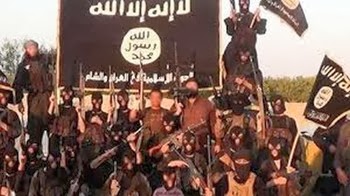
Al-Qaeda takes over in Fallujah, Iraq.
|
Monday, September 09, 2013
David P. Goldman on Why US Fails When It Comes To Arab Intelligence
The following by David P. Goldman is resposted here with permission of the Middle East Forum:
One in five applicants for jobs at the Central Intelligence Agency have ties to Muslim terrorist organizations, according to the latest round of Snowden leaks. And Israel is a major target of American counterintelligence. Washington is insane.
Three years ago, the Washington Post sketched the elephantiasis in the U.S. intelligence establishment without, of course, access to the detailed numbers leaked by Edward Snowden last week. It doesn't matter how much money you spend if you can't hire people you can trust. If you spend $52 billion in the "black budget," you create so many conflicting bureaucratic interest groups as to cancel out any possible signal with a wave of noise.
 |
| David P. Goldman |
Three years ago, the Washington Post sketched the elephantiasis in the U.S. intelligence establishment without, of course, access to the detailed numbers leaked by Edward Snowden last week. It doesn't matter how much money you spend if you can't hire people you can trust. If you spend $52 billion in the "black budget," you create so many conflicting bureaucratic interest groups as to cancel out any possible signal with a wave of noise.
Wednesday, March 06, 2013
The Real "Imperialist Tool" In The Middle East Are The Arabs Themselves
Barry Rubin asks Who Is the "Imperialist Tool" in the Middle East? -- at issue is the ignorance of the Middle East exhibited in academia:
I know that the situation has become far worse in recent years, having vivid memories of how my two main Middle East studies professors—both Arabs, both anti-Israel, and one of them a self-professed Marxist—had contempt for Edward Said and the then new, radical approach to the subject. At one graduate seminar, the students--every single one of them hostile to Israel but not, as today is often the case, toward America--literally broke up in laughter pointing out the fallacies in Said’s Orientalism. Today, no one would dare talk that way, it would be almost heresy.
Let me now take a single example of the radical approach so common today and briefly explain how off-base it is. I won’t provide detailed documentation here but could easily do so.
The question is: Who in the Middle East was the tool of imperialism? Most likely the professors and their students, at least their graduate student acolytes, would respond: Israel. Not at all.
Thursday, October 12, 2006
Look Who's Persecuting Their Arab Minority!
Persecution of an Arab minority.
Confiscation of Arab land.
Ethnic cleansing.
It's just another day in...Iran.
From The Times Online:
No fiery Arab rhetoric.
No UN denounciation
Just another quiet day in the Middle East--move along; nothing to see here.
Any question that Israel is not the only one that need worry about Iran?

Confiscation of Arab land.
Ethnic cleansing.
It's just another day in...Iran.
From The Times Online:
“NEVER AGAIN” is, I fear, a phrase that we may hear again all too soon — but too late to warn people, let alone save lives. Under the cover of secrecy the fundamentalist regime in Tehran is waging a sustained, bloody campaign of intimidation and persecution against its Arab minority. These Arabs believe that they are victims of “ethnic cleansing” by Iran’s Persian majority.And guess who is playing into this persecution of Arabs--
Sixteen Arab rights activists have been sentenced to death, according to reports in the Iranian media. They were found guilty of insurgency in secret trials before revolutionary courts. But most of the defendants were convicted solely on the basis of confessions extracted under torture. Ten are expected to be hanged in a couple of weeks, after the end of Ramadan. Amnesty International says that two of those sentenced to die, Abdolreza Nawaseri and Nazem Bureihi, were in prison when they were alleged to have been involved in bomb attacks. Three others — Hamza Sawa- eri, Jafar Sawari and Reisan Sawari — say that they were nowhere near the Zergan oilfield the day it was bombed.
The death sentences seem designed to silence protests by Iran’s persecuted ethnic Arabs. They comprise 70 per cent of the population of the south-west province of Khuzestan, known locally as Ahwaz. Many Ahwazis believe that the 16 were framed and that their real “crime” was campaigning against Tehran’s repression and exploitation of their oil-rich homeland.
Further show trials are planned — 50 Ahwazi Arab activists have been charged with insurgency since last year. They are accused of being mohareb or enemies of God, which is a capital crime. Other allegations include sabotage and possession of home-made bombs. No material evidence has been offered to support the charges. All face possible execution.
...Tehran’s latest tactic is to hold Ahwazi children as hostages. According to Amnesty International, children as young as 2 have been jailed with their mothers to force their fugitive, political-activist fathers to surrender to the police. Protests against these abuses are brutally suppressed. Ahwazi political parties, trade unions and student groups are illegal. In the past year, 25,000 Ahwazis have been arrested, 131 executed and 150 have disappeared, reports AHRO. The bodies of many of those executed have been dumped in a place that the Government calls lanat abad, the place of the damned. They are buried in shallow graves; dogs dig up and eat the bodies.
Nearly 250,000 Arabs have been displaced from their villages after the Iranian Government’s confiscation of more than 200,000 hectares of farmland for a huge sugar-cane project. Dozens more towns and villages will be erased, making a possible further 400,000 Ahwazis homeless, by the creation of a military-industrial security zone, covering more than 3,000 sq km, along the Shatt al-Arab waterway, which borders Iraq.
Ironically, the Hezbollah in Lebanon — the supposed embodiment of Arab resistance in the Middle East — is complicit in the displacement of Ahwazi Arabs. On confiscated Arab land Tehran has set up training camps for Hezbollah and for the Badr Brigades, the Iraqi fundamentalist militia. Badr death squads in Iraq are murdering Sunnis, unveiled women, gay people, men wearing shorts, barbers, sellers of alcohol and people listening to Western music.Then there is the ethic cleansing part.
Tehran has a grand plan to make the Ahwazi a minority in their own land through “ethnic restructuring”. Financial incentives, such as zero- interest loans, are given to ethnic Persians to settle in Ahwaz. New townships are planned, which will house 500,000 non-Arabs. Meanwhile, tens of thousands of displaced Ahwazis eke out a subsistence existence in shanty towns on the outskirts of Ahwaz city. Others have been forcibly relocated to poverty-stricken, far-flung northern regions of Iran.The rest:
Ahwaz produces 90 per cent of Iran’s oil and Tehran expropriates all the revenues. An attempt by Ahwaz MPs to secure the repatriation of 1.5 per cent of these earnings back to the region for welfare projects was rejected this year. Yet it is the third poorest region of Iran: 80 per cent of the children suffer from malnutrition, and the unemployment rate of Arabs is more than five times that of Persians.No world condemnation.
Arab language newspapers and textbooks have been banned to crush Arab identity further. In Ahwaz schools, all instruction is in Farsi (Persian), resulting in a 30 per cent drop-out rate at primary level and 50 per cent at secondary level. Illiteracy rates among Arabs are at least four times those of non-Arabs.
Contrary to Tehran’s nationalist propaganda most Ahwazi Arabs just want a measure of self-government; they are not hellbent on independence or in league with the CIA or plotting for an American invasion. Quite the contrary, they fear that Western sabre-rattling will be used as a pretext by Tehran’s hardliners to crack down savagely on dissent. Which makes it all the more disturbing that one of the few bodies with diplomatic muscle — the Arab League, which professes pan-Arab solidarity — is so silent in the face of Iran’s persecution of Arabs.
No fiery Arab rhetoric.
No UN denounciation
Just another quiet day in the Middle East--move along; nothing to see here.
Any question that Israel is not the only one that need worry about Iran?
Technorati Tag: Iran and Hezbollah.
Wednesday, October 11, 2006
Who Is Iran's Real Nuclear Target?
We've all heard how Israel is the main target of a potenial nuclear attack--whether for its own sake or as a way to pressure the US. But what if Israel is not the main target? According to the Chicago Tribune, the Arab world may be beginning to think that they may be Iran's main target.
...In a recent opinion piece titled "For These Reasons We Fear Iran" in the pan-Arabic daily Al-Sharq Al-Awsat, the director of Al-Arabiya TV, Abd al-Rahman al-Rashed, argued that the most likely target of Iran's nuclear weapons is the Arab countries of the Persian Gulf.
"It is incomprehensible that Iran will bomb Israel, which has a shield of missiles, tremendous firepower and nuclear weapons artillery sufficient to eradicate every city in Iran," he wrote. "This means that if this destructive weapon is used, the only option for a target is the Arab Gulf."
At the Dayan Center, Bengio said she wouldn't be surprised if Arab countries at this moment are trying to persuade Washington to attack Iran's nuclear facilities. She acknowledged that an American attack would produce a sharp reaction from the so-called Arab street. But she thinks Arab regimes believe they can handle the unrest, and that they would take that chance rather than see Iran continue to build political, military and ideological influence in the Arab back yard.
In case the U.S. does not take action, Sunni Arab nations are making contingency plans. Saudi Arabia has engaged in a huge military shopping spree, spending billions on American Black Hawk helicopters and armored vehicles, and negotiating billions more in purchases from France and Britain.
Egypt recently announced its intentions to pursue nuclear energy, a decision echoing Iran's claim that its nuclear program seeks only to produce electricity.
The conflict in Lebanon was a wake-up call to many Arab countries about the danger they could face from the "Shiite Axis," according to published comments by Martin Indyk, director of the Saban Center for Middle East Policy at The Brookings Institution and a former U.S. ambassador to Israel.
In the short term, the public voice of Arab politics will continue to castigate Israel for its treatment of Palestinians. Still, as Iran continues to strut its newfound influence on the international stage, and as its militias continue to boast of their great arsenals and ideological fervor, the regional realignment will continue to take shape. A not-so-secret meeting between an Israeli prime minister and Saudi officials looks like one of the first steps toward that transformation.
Keep in mind that according to Mearsheimer and Walt, the Israel Lobby has made the US unneccesarily antagonistic to the interests of the one billion Moslems in the world in general, and to Iran in particular.
What if Saddam Hussein in Iraq, Iran left to its own interests, and Palestinians unable to govern themselves are not in the best interests of those 1 billion Moslems in general and the Arab World in particular?
Technorati Tag: Israel and Iran and Middle East.
Sunday, October 01, 2006
The Difference Between the Japanese and the Arabs
From The Arab Mind by Raphael Patai on old Arab poems:
Technorati Tag: Arabs.
Compared to the value of honor[,] that of a human life was minor--an attitude exemplified by numerous stories, both old and new, telling of how the hero fulfills a pledge, which is a matter of honor, or protects or restores his honor, even though it requires that he sacrifice the life of his own son or of one or more of his subordinates. As a widely read Arab friend of mine once remarked in a critical vein, both the Japanese and the Arabs are ready to kill in order to regain their lost honor; but the Japanese will kill himself, while the Arab will kill somebody else. [p.224]And these days, any dhimmi will do.
Technorati Tag: Arabs.
Friday, September 29, 2006
Maariv: Homemade Genocide in the Muslim World
The summary below comes from The Daily Alert, prepared for the Conference of Presidents of Major American Jewish Organizations
by the Jerusalem Center for Public Affairs
Homemade Genocide in the Muslim World - Ben Dror Yemini (Maariv)
Update:
Israel Matzav blogged about this article too, and noticed something in the actual article that I missed:
by the Jerusalem Center for Public Affairs
Homemade Genocide in the Muslim World - Ben Dror Yemini (Maariv)
- Dozens of publications and websites are dedicated to the purpose of portraying Israel as a state that ceaselessly perpetrates war crimes. The tragedy is that in Arab and Muslim countries a massacre is happening that has no connection to Israel, Zionism, or Jews. It is a genocide of mainly Arabs and Muslims, by Arabs and Muslims.
- In Algeria between the years 1954-1962, the French (who do not stop preaching to Israel) killed nearly 600,000 Muslims. In addition, the civil war begun in the 1990s has claimed 100,000 victims so far.
- In Sudan, a civil war during 1955-1972 claimed 500,000 victims. In recent years fighting there has claimed between 200,000 and 600,000 victims. In Afghanistan, the Soviet invasion, which began in 1979 and ended in 1989, left about a million dead. Since 1977 Somalia has been immersed in an unending civil war with the number of victims estimated at about 550,000.
- When Bangladesh aspired to gain independence from Pakistan, Pakistan reacted with a military invasion during which one to two million people were systematically liquidated in 1971. In Indonesia, the biggest Muslim state in the world, as many as 400,000 were killed in 1965-1966 after a communist uprising. After East Timor announced its independence from Indonesia, Indonesia invaded and during 1975-1999 about 100,000 to 200,000 people were killed.
- In the Iran-Iraq war of 1980-1988, between 450,000 and 650,000 Iraqis, and between 450,000 and 970,000 Iranians were killed. During Saddam Hussein's reign in Iraq, between 200,000 to 300,000 Kurds were killed in a genocide throughout the 1980s and 1990s. In 1991-1992, between 40,000 and 200,000 were killed in a Shiite uprising in Iraq. An estimated 100,000 people have been killed since the coalition forces took control in Iraq in 2003.
- In the Lebanese civil war in 1975-1990, 130,000 were killed. In the civil war in Yemen in 1962-1970, 100,000 to 150,000 were killed. In Chechnya since 1994 there have been 80,000 to 300,000 fatalities. From Jordan to Zanzibar, there have been smaller confrontations that have cost the lives of tens of thousands of Muslims and Arabs, killed by Muslims and Arabs.
- What would have happened to the Palestinians if they were under Iraqi occupation? Or Sudanese? Or even French or Soviet? The genocide that Israel is not committing hides the real genocide, the silenced genocide that Arabs and Muslims are committing mainly against themselves.
Scowcroft, in his interview, discussed an argument over Iraq he had two years ago with Condoleezza Rice, then-national security adviser and current secretary of state. "She says we're going to democratize Iraq, and I said, 'Condi, you're not going to democratize Iraq,' and she said, 'You know, you're just stuck in the old days,' and she comes back to this thing that we've tolerated an autocratic Middle East for fifty years and so on and so forth," he said. The article stated that with a "barely perceptible note of satisfaction," Scowcroft added: "But we've had fifty years of peace." [emphasis added]Right.
Update:
Israel Matzav blogged about this article too, and noticed something in the actual article that I missed:
Towards the end, he throws in this curious fact:Technorati Tag: Israel and Moslems and Arabs.
Another fact: Since WWII, the Israeli-Palestinian conflict is the national conflict with the lowest number of victims, but with the world’s highest number of publications hostile to Israel in the media and in the Academia.
Wednesday, September 27, 2006
Ramadan Rioting, Media Non-Reporting
From The Brussels Journal:
Last Sunday the Islamic holy month of Ramadan began. It lasts until 23 October. Many will remember last year’s ramadan riots, which set France and, to a lesser extent, parts of Belgium and Denmark, alight. Rioting went on for three weeks. Each night thousands of cars were set alight by immigrant youths, until the French and Belgian governments ordered the police to no longer divulge any information about the disturbances, after which the media stopped reporting, the youths lost interest and the number of nightly “carbecues” in France dropped to the “normal” level of about 50.Now, as of Wednesday, Brussels has suffered 3 days of rioting:
It looks as if immigrants youths want to turn nightly rioting during the Islamic holy month of ramadan into an annual tradition. Around 8:30pm last night violence erupted again in Brussels, the capital of Europe. The riots centered on the Brussels Marollen quarter and the area near the Midi Train Station, where the international trains from London and Paris arrive. Youths threw stones at passing people and cars, windows of parked cars were smashed, bus shelters were demolished, cars were set ablaze, a youth club was arsoned and a shop was looted. Two molotov cocktails were thrown into St.Peter’s hospital, one of the main hospitals of central Brussels. The fire brigade was able to extinguish the fires at the hospital, but youths managed to steal the keys of the fire engine.The current riots apparently were set off by the suspicious death of an inmate in the Vorst prison. Meanwhile, according to the article, France also is afraid of riots during Ramadan.
Another source of Belgian concern is that municipal elections will be held on October 8th, and they are expected to be won by an anti-immigrant "islamophobic" party with 38.6% of the vote, as opposed to 33% of the vote six years ago.
Snapped Shot, who is covering the story extensively, has noticed that the MSM is virtually ignoring the story--while Reuters has reported on it, none of the other wire services or major papers have.
Apparently the same policy of smothering the story that supposedly solved the problem last time by decreasing the level of 'interest' in the riots--is being used now. And the media, as always, can be expected to cooperate.
Technorati Tag: Ramadan and Belgium and France.
Monday, August 14, 2006
Scowcroft and the Myth of Israeli Responsibility for Mideast Unrest
The Best of the Web notes that on October 25 last year, the following appeared in The Washington Post about Brent Scowcroft, former National Security Advisor to Presidents Gerald Ford and H. W. Bush:
Technorati Tag: Israel and Arabs and Brent Scowcroft and Jihad and Iran and Islam.
Scowcroft, in his interview, discussed an argument over Iraq he had two years ago with Condoleezza Rice, then-national security adviser and current secretary of state. "She says we're going to democratize Iraq, and I said, 'Condi, you're not going to democratize Iraq,' and she said, 'You know, you're just stuck in the old days,' and she comes back to this thing that we've tolerated an autocratic Middle East for fifty years and so on and so forth," he said. The article stated that with a "barely perceptible note of satisfaction," Scowcroft added: "But we've had fifty years of peace." [emphasis added]In response to Scowcroft's satisfaction that there have been 50 years of peace among the autocratic rulers in the Mideast, James Taranto points out:
Now let's see. Between 1953 and 2003, here are the Mideast wars we can think of off the top of our head: the Six Day War, the Yom Kippur War, the Iran-Iraq War, the Gulf War, the two Palestinian intifadas against Israel, the Algerian Civil War, the Yemen Civil War and two Sudanese civil wars. That doesn't even count acts of terror against non-Mideastern countries, from the Iranian invasion of the U.S. Embassy to the attacks of 9/11.Now you can argue that Scowcroft was speaking only in terms of Arab conflicts and not those based on wars with Israel, which brings the number of conflicts down, but Raphael Patai, has his own list--which does not include Israel--counting just from 1970 to 1983, which he lists in a chapter he added to an updated version of his The Arab Mind in 1983:
1. Intermittent disputes involving border warfare and assassinations between South Yemen on the one hand, and North Yemen and Saudi Arabia, on the other since the early 1970's. A brief but fierce border war between the two Yemens took place as recently as March, 1979.
2. A major and bloody, albeit brief, conflict between Jordan and Palestinian guerillas in 1970, complicated by Syrian intevention.
3. Fighting between the Kurds and the Iraqis, which lasted several yesrs.
4. A bloody conflict between Northern and Southern Sudan, 1956-1972.
5. Clashes between South Yemen and Oman, linked to the Dhofar rebellion, 1972-1976.
6. A tripartite confict between Algeria on the one hand and Morocco and Mauritania, on the other, over the control of the former Spanish Sahara, beginning in 1976 and subsequently transformed into guerrilla warfare against Morocco by the Polisario, the freedom fighters of the Western Sahara, supported by Algeria and Libya, which was still in progrss in 1982.
7. Intermittent hostility, and actual border fighting, including air attacks, between Egypt and Libya in 1977.
8. The Lebanese civil war, which began in 1975, involving two outside parties, Syria and the Palestine Liberation Organization, still unresolved in early 1982.
9. The invasion of Chad by Libya in 1980.
10. The war between Iraq and Iran, wich began in the fall of 1980, in which Iraq is supported by Jordan and Iran by Syria, making it in effect, an inter-Arab conflict. It was still in progress in early 1982.
11. In February, 1982, a conflict flared up between the Syrian government and Muslim fundamentalists in the Syrian city of Hama, in which several thousands were killed and major parts of Hama were destroyed. [p.357-358]
Now on July 30, Brent Scowcroft, former National Security Advisor to Presidents Gerald Ford and H. W. Bush, wrote an op-ed piece in the Washington Post about the potential opportunity for resolving the conflict between Israel and the Palestinian Arabs based on the current war in Lebanon.
Besides some debatable assumptions about what Israel and the Palestinian Arabs can come to agreement on--unless Scowcroft is relying on international pressure on Israel to paper over their differences--Scowcroft still thinks Israel is the initial domino that will set everything else aright:
The benefits of reaching a comprehensive settlement of the root cause ofHistory clearly shows the capability of the Arab world to generate massacres and enormous bloodshed among themselves without recourse to Israel as a spark. Currently, the source of instability in the Mideast is Iran's drive towards Muslim leadership, now manifesting itself through its Hezbollah proxy attacking Israel, with whom Iran has no border and no real issue. This, as part of the growing Islamist threat, should direct the world's attention away from attempts at simplistic solutions focused purely on the Palestinian Arabs and instead towards the genuine threat to world peace.
today's turmoil would likely ripple well beyond the Israelis and the
Palestinians. [emphasis added]
Technorati Tag: Israel and Arabs and Brent Scowcroft and Jihad and Iran and Islam.
1970 Survey of Israeli Arabs: What Traits Jews Should Learn From Them
I'm still reading Raphael Patai's The Arab Mind, and I'm still finding things of interest in it to post.
On page 104, Patai writes about a survey done in 1970 of what Israeli Arabs in Nazareth and the surrounding area thought Israeli Jews could learn from them. According to the results:
According to Patai, the survey indicates what those traits are that the Arab respondents believed actually characterized them--as opposed to being ideal traits.
I wonder if the survey also indicates those traits that Arabs feel are lacking in the Israelis (Sabras) they came in contact with.
Since I am in Cincinnati this week, I don't have access to my books, but I recall that S.D. Goitein writes about the difference in attitude between Arabs and Sabras. Maybe when I get back I can post more about this.
It would also be interesting if in the last 36 years someone thought of doing other surveys of what Israeli Arabs thought about Jews and Jewish traits.
If anyone is interested the Patai's source is:
Yochanan Peres, "Modernization and Nationalism in the Identity of the Israeli Arab," The Middle East Journal vol. 24, no. 4 (Autumn, 1970), p. 488.
On page 104, Patai writes about a survey done in 1970 of what Israeli Arabs in Nazareth and the surrounding area thought Israeli Jews could learn from them. According to the results:
...41 per cent of the 464 respondents stated that they thought the Jews should learn from the Arabs hospitality, friendliness, and generosity; while 19 per cent answered that they should learn from the Arabs pride, honor, and honesty. Only a very small percentage of the respondents felt that the Jews should learn from the Arabs other things, such as tolerance and nondiscrimination (4 per cent), honor for parents and modesty (2 per cent), customs and details of traditions relating to foodstuffs, style of building, etc. (3 per cent), and agriculture (2 per cent).
According to Patai, the survey indicates what those traits are that the Arab respondents believed actually characterized them--as opposed to being ideal traits.
I wonder if the survey also indicates those traits that Arabs feel are lacking in the Israelis (Sabras) they came in contact with.
Since I am in Cincinnati this week, I don't have access to my books, but I recall that S.D. Goitein writes about the difference in attitude between Arabs and Sabras. Maybe when I get back I can post more about this.
It would also be interesting if in the last 36 years someone thought of doing other surveys of what Israeli Arabs thought about Jews and Jewish traits.
If anyone is interested the Patai's source is:
Yochanan Peres, "Modernization and Nationalism in the Identity of the Israeli Arab," The Middle East Journal vol. 24, no. 4 (Autumn, 1970), p. 488.
Technorati Tag: Israel and Arabs and Jews.
Wednesday, July 26, 2006
Historically, Arab Conquests Have Been An Occupational Hazard
With Arab talk of "Israeli Occupation," you might forget that what are today Arab countries today were not always that way. In The Arab Mind, Raphael Patai gives a short rundown:
Within eighty years after the death of Muhammad (632), the Arabs held sway over Spain, North Africa, Egypt, the Fertile Crescent and several contiguous areas, most of which have remained both Arab and Muslim to the present day. Successive generations carried the banner of Islam into more remote parts of the world, including, in the east, Central Asia as far as Mongolia, the Indian Peninusla, and Southeast Asia; in the west, the Balkans and Hungary; and in the south the wide Sudan belt of Africa. (p. 48)Bernard Lewis makes the point even more clearly. In What Went Wrong, Lewis notes
In the course of the seventh century, Muslim armies advancing from Arabia conquered Syria, Palestine, Egypt, and North Africa, all until then part of Christendom, and most of the new recruits to Islam, west of Iran and Arabia, were indeed converts from Christianity. (p.4, emphasis added)Lewis describes how the Moslem invasions did not stop there.
During the eighth century, using North Africa as their base, the Arab forces were joined by Berber converts as they went into Spain and Portugal and invaded France.
In the ninth century they conquered Sicily and sacked Rome--resulting in the Christian counter-attack known as the Crusades, hardly the offensive unprovoked attack that the Arab world condemns.
In the thirteenth century, the Tartars conquered Russia and later converted to Islam--meaning that Russia and much of Eastern Europe was subjected to Moslem rule till they freed themselves in the late 15th century.
During a third wave of attacks, the Ottoman Turks conquered Anatolia, captured Constantinople, invaded the Balkan peninsula and reached as far as Vienna.
Bernard Lewis writes:
At the peak of Islamic power, there was only one civilization that was comparable in the level quality and variety of achievement; that of course was China. (p. 6)The difference being that China was limited to one area.
So historically, the Arabs have the distinction of being The World's Greatest Occupational Power.
And you know what that means. Like any other occupational force, the occupying forces of the Moslem army had to deal with the occupied population--though not in terms of
In The Crisis of Islam, Lewis writes
By this time the jihad had become almost entirely defensive--resisting the Reconquest in Spain and Russia, resisting the movements for national self-liberation by the Christian subjects of the Ottoman Empire, and finally, as Muslims see it, defending the very heartlands of Islam against infidel attack. (p. 34 emphasis added)By contrast, pre-1948 Palestine was a bargain--where Jews were willing to share a land that never lacked for some Jewish presence, in spite of its desolation at the hands of the Arab occupation, as recorded by Mark Twain in Innocents Abroad:
Palestine sits in sackcloth and ashes. Over it broods the spell of a curse that has withered its fields and fettered its energies...Renowned Jerusalem itself, the stateliest name in history, has lost all its ancient grandeur, and is becorme a pauper village...But the Arab occupier-as-occupied claim goes along with similar claims made regarding the Taj Mahal and their continued claim to Spain. As Ephraim Karsh writes:
...Palestine is desolate and unlovely. And why should it be otherwise? Can the curse of the Deity beautify a land? (online here)
the fact is that the fuel of Islamic imperialism remains as volatile as ever, and is very far from having burned itself out. To deny its force is the height of folly, and to imagine that it can be appeased or deflected is to play into its hands. Only when it is defeated, and when the faith of Islam is no longer a tool of Islamic political ambition, will the inhabitants of Muslim lands, and the rest of the world, be able to look forward to a future less burdened by Saladins and their gory dreams.But the first step is to recognize the threat, and we are not even up to that point yet.
Technorati Tag: Israel and Islamism and Middle East and Occupation and Arab.
Wednesday, July 19, 2006
Why Can't The Arabs Just Move On Like Everybody Else?
One of the points made by the apologists for the Arab world in general is that the Western World has done them a terrible wrong, according to which it is perfectly understanable why there is a hatred for the West in the Arab world and it is incumbent upon the West to educate itself to better understand that world and be sure not to offend it further.
To a degree, this obliged deference has been extended to include a special respect towards Islam itself, which has been extended so far as to include the banning of Piglet.
In The Arab Mind, Raphael Patai asks the question why the Arab hatred of the West is so unique when their situation is not:
Why is it that of all the nations who find themselves in a similar situation vis-a-vis the West, this hatred of the West and this "cultural inferiority complex" in relation to it arose in a most pronounced form precisely among the Arabs? (p. 314)He notes that there are other countries that have managed to overcome their problems with domination by the West without holding a perpetual grudge:
1.) Japan suffered horribly during WWII. In addition, Japan was occupied and ruled by the US for a number of years. Despite this, there is nothing among the Japanese approaching the Arab hate of the West.
2.) A number of Black African states were French colonies and even after gaining their independence their culture retains its French influence--yet again there is no hate of the West or of the French. [The current outbreaks of violence can be attributed to the lack of economic opportunity and to a large extent those who are part of the riots are Moslem.]
3.) India was under British rule for 200 years and their relationship to the British was comparable to the relationship that that the Arab states had with the British from the end of WWI till their independence, yet little of the hatred that is found in the Arab world is expressed by India and Moslem Pakistan. Going a step further, Patai points out that India resented the partition that led to the establishment of Pakistan just as much as Syria, Iraq and Egypt resented the partition of then-Palestine which led to the re-establishment of Israel--yet the political disagreement with Great Britain and the West did not lead to hatred, nor a cultural inferiority complex.
Patai notes:
Here we have, then a number of ex-colonial nations, all of whom had largely similar experiences with the Western powers and all of whom are today in a similar situation with reference to the intrusive, dominant, and often overwhelming Western culture. If of them all only the Arabs display that hatred of the West and that cultural inferiority complex which has been noted by both Arab and foreign observers, the cause evidently does not lie in the colonial and post-colonial experiences of the Arabs, but in a different set of factors. (p. 315, emphasis added)Patai concludes that there are 3 factors that cause Arab resentment.
One of the factors that separates the Arabs from other post-colonial countries is their contributions to the cultural development of the West.
Another factor unique to the Arabs is their history, during which they met the West in battle on more than one occasion, defeated, and subjected it to their rule--in Spain and as far north as Hungary.
The third factor for the Arabs is their religion, Islam--with their policial defeat, they lost their sense of religious superiority as well.
While apologists for the Arab world--many of them Middle East scholars who are as anti-US as they are pro-Arab--will wax poetic on the topic of Arab contributions to Western culture and how Islam is a religion of peace, the topic of the history of Islamic Imperialism is not touched upon, even while Islamists pine openly for a return to domination in countries such as Spain--and beyond.
Patai, who wrote the book in 1972 and wrote a preface to the 1983 reprinting, thought the Arab world was coming into their own. Oil put them on an equal footing with the West. Egypt's 'victory' in the 1973 war with Israel (before being repulsed) allowed them to save face according to Patai and accounts for why they were then able to be the first to sign a peace agreement with Israel, regardless of its flaws.
Patai was optimistic that the Arab world was on its way to becoming a part of the 20th century, a view that has not been vindicated yet, not even in the 21st century.
The point is that the Arabs are not evil incarnate, and if the anti-West scholars, Islamist organizations (I'm thinking CAIR), and terrorists can be prevented from hijacking the future of civilization as we know it, maybe something can be worked out.
It is tempting to think that the refusal of the Arab world to rally behind Hizbollah may be a start, but Michael Rubin writes in the Wall Street Journal ("Iran Against the Arabs") that such hopes are illusory:
It may be tempting to think that acceptance of Israel is in the air. But such optimism is unfounded. There is no change of heart in Riyadh, Cairo or Kuwait. Saudi princes still finance Palestinian terror. Rather, the recent Arab tolerance toward Israel's predicament and condemnation of Hezbollah signal recognition of a greater threat on the horizon. Wadi Batti Hanna, a columnist in Iraq's Arab nationalist al-Ittijah al-Akhar daily, put it bluntly when, on July 15, he asked, "How long will the Arabs continue to fight on behalf of Iran?"
It never gets easier.
Technorati Tag: Israel and Arabs and Raphael Patai.
Friday, February 24, 2006
Bernard Lewis: The New Anti-Semitism III--The UN
Lastly, Lewis notes some of the disparities in the way the UN has handled the Middle East--going back to 1948.
1. Following the 1948 War of Independence, it was accepted without argument that Arabs could remain under Israeli rule, but no Jews could remain in those areas that ended up under Arab control.
2. Among Jews who could not stay in Arab controlled areas there were "not just settlers, but old, established groups, notably the ancient Jewish community in East Jerusalem, which was totally evicted and its monuments desecrated or destroyed." There was no outrcy from either the UN nor international public opinion. The Arab world took note.
3. The UN response to Arab refugees was to make very elaborate arrangements with extensive financing--as opposed to the UN response to Jews of equal number who either fled or were driven out from Arab lands, and as opposed to how other refugees from other countries were treated ("Hindus who fled or were driven from Pakistan into India, Muslims who fled or were driven from India into Pakistan...the millions of refugees in Central and Eastern Europe—Poles fleeing from the Eastern Polish areas annexed to the Soviet Union and Germans fleeing from the East German areas annexed to Poland").
4. Following the war in 1948, Arab countries went beyond just not recognizing Israel. They also refused to allow Israelis of any religion into their countries. Israeli Christians and Arabs were not allowed into East Jerusalem, though Israeli Christians could enter on Christmas Day for a few hours. At the time, Israeli Muslims were not allowed to go on their obligatory pilgrimage to Mecca and Medina.
5. Virtually all Arab countries refused to give visas to Jews of any nationality--"Again, not a word of protest from anywhere. One can imagine the outrage if Israel had announced that it would not give visas to Muslims, still more if the United States were to do so. As directed against Jews, this ban was seen as perfectly natural and normal."
6. The Jordanian nationality law of February 4, 1954 accepts Palestinian natives and residents as citizens--with no objection by international public opinion.
7. A report was presented to UNESCO on April 4, 1969 on the anti-Semitic material found after the Six Day War in textbooks funded by UNESCO. The report was not published.
Consistently, these actions by the Arab countries were accepted as natural and normal, with no offical protest--a point that the Arab world noted.
Lewis concludes that:
o Bernard Lewis: The New Anti-Semitism I--The Jewish Lobby
o Bernard Lewis: The New Anti-Semitism II--Arab Humor
1. Following the 1948 War of Independence, it was accepted without argument that Arabs could remain under Israeli rule, but no Jews could remain in those areas that ended up under Arab control.
2. Among Jews who could not stay in Arab controlled areas there were "not just settlers, but old, established groups, notably the ancient Jewish community in East Jerusalem, which was totally evicted and its monuments desecrated or destroyed." There was no outrcy from either the UN nor international public opinion. The Arab world took note.
3. The UN response to Arab refugees was to make very elaborate arrangements with extensive financing--as opposed to the UN response to Jews of equal number who either fled or were driven out from Arab lands, and as opposed to how other refugees from other countries were treated ("Hindus who fled or were driven from Pakistan into India, Muslims who fled or were driven from India into Pakistan...the millions of refugees in Central and Eastern Europe—Poles fleeing from the Eastern Polish areas annexed to the Soviet Union and Germans fleeing from the East German areas annexed to Poland").
4. Following the war in 1948, Arab countries went beyond just not recognizing Israel. They also refused to allow Israelis of any religion into their countries. Israeli Christians and Arabs were not allowed into East Jerusalem, though Israeli Christians could enter on Christmas Day for a few hours. At the time, Israeli Muslims were not allowed to go on their obligatory pilgrimage to Mecca and Medina.
5. Virtually all Arab countries refused to give visas to Jews of any nationality--"Again, not a word of protest from anywhere. One can imagine the outrage if Israel had announced that it would not give visas to Muslims, still more if the United States were to do so. As directed against Jews, this ban was seen as perfectly natural and normal."
6. The Jordanian nationality law of February 4, 1954 accepts Palestinian natives and residents as citizens--with no objection by international public opinion.
7. A report was presented to UNESCO on April 4, 1969 on the anti-Semitic material found after the Six Day War in textbooks funded by UNESCO. The report was not published.
Consistently, these actions by the Arab countries were accepted as natural and normal, with no offical protest--a point that the Arab world noted.
Lewis concludes that:
For those who needed it, all this provided an up-to-date, intellectually and socially acceptable rationale for what ought to be called anti-Semitism but, since that word isn't acceptable, might be called Jew-baiting, Jew-hating, or generally being unpleasant to Jews.See also:
o Bernard Lewis: The New Anti-Semitism I--The Jewish Lobby
o Bernard Lewis: The New Anti-Semitism II--Arab Humor
Technorati Tag: Israel and UN and Palestinians and UNESCO and Jordan and Arabs and Anti-Semitism.
Subscribe to:
Posts (Atom)