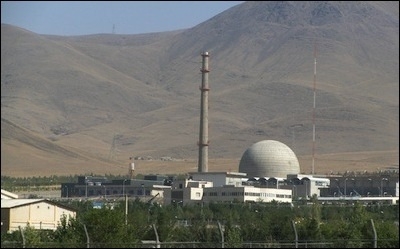
Iran's nuclear facility in Arak. Tehran's quest for nuclear weapons is, perhaps, the foremost threat to Middle Eastern stability, if not to world peace, in the foreseeable future. President Obama's policies have allowed Iran to move ever closer to producing nuclear weapons.
|
Showing posts with label Middle East. Show all posts
Showing posts with label Middle East. Show all posts
Tuesday, February 23, 2016
MEQ: Efraim Karsh: Obama's Middle East Delusions
The following by Efraim Karsh is reposted here with the permission of The Middle East Forum:
As the only person to have won the Nobel Peace Prize on the basis of sheer hope rather than actual achievement, Barack Hussein Obama could be expected to do everything within his power to vindicate this unprecedented show of trust. Instead he has presided over a clueless foreign policy that has not only exacerbated ongoing regional conflicts but made the world a far more dangerous place. Nowhere has this phenomenon been more starkly demonstrated than in the Middle East where the Nobel laureate has abetted Tehran's drive for regional hegemony and brought the regime within a stone's throw of nuclear weapons; driven Iraq and Libya to the verge of disintegration; expedited the surge of Islamist terrorism; exacerbated the Syrian civil war and its attendant refugee problem; made the intractable Palestinian-Israeli conflict almost irresolvable; and plunged Washington's regional influence and prestige to unprecedented depths,[1] paving the road in grand style to Russia's resurgence.


Tuesday, June 30, 2015
Raymond Ibrahim: Where Is the Pope's Encyclical on Christian Persecution?
The following by Raymond Ibrahim is reposted here with the permission of the Middle East Forum:
 Pope Francis recently released a new encyclical. Portions of it deal with environmentalism, global warming, and climate change. Naturally, this has prompted controversy.
Where Is the Pope's Encyclical on Christian Persecution?
It's noteworthy that Francis didn't merely make a passing comment on global warming during this or that sermon, but that he issued a papal encyclical on the matter. Encyclicals are much more formal and significant than remarks made during mass. They are letters written by a pope and sent to bishops all around the world. In turn, the bishops are meant to disseminate the encyclical's ideas to all the priests and churches in their jurisdiction, so that the pope's teaching reaches every church-attending Catholic.
Monday, March 17, 2014
Jonathan Spyer: Shifting Mideast Sands Reveal New Alliances
The following by Jonathan Spyer is reposted here with permission of Middle East Forum:
A number of events in recent weeks cast light on the current intersecting lines of conflict in the Middle East. They reflect a region in flux, in which new bonds are being formed, and old ones torn asunder.
Shifting Mideast Sands Reveal New Alliances
 |
| Jonathan Spyer |
But amid the confusion, a new topography is emerging.
This was the month in which a long-existent split in the Sunni Arab world turned into a gaping fissure. On March 5th, Saudi Arabia, Bahrain and the United Arab Emirates announced that they were withdrawing their ambassadors from the Emirate of Qatar.
This decision was clearly a response to Qatar's continued support and sponsorship of the Muslim Brotherhood movement. This movement is regarded as a subversive threat by the three Gulf states. They are worried by the Brotherhood's capacity for internal subversion.
Monday, February 17, 2014
Mark Durie: Islam's Second Crisis: The Troubles to Come
The following by Mark Durie is reposted here with permission of Middle East Forum:
In What Went Wrong, Bernard Lewis charted the decline of Islam in the modern era and the resulting theological crisis for the Muslim world.
Islam's Second Crisis: The Troubles to Come
 |
| Mark Durie |
Now Islam is going through a second crisis, caused by the repeated failures of revivalist responses to the first crisis. This second crisis, combined with the cumulative effect of the first crisis, which remains unresolved, will lead to a long drawn-out period of political and social instability for Muslim societies.
The first millennium of Islam was a period of expansion through conquest. However for five centuries from around 1500, Western powers were pushing back Islamic rule. There were numerous landmarks of the ascendancy of the West (which includes Russia), such as:
Tuesday, January 28, 2014
Why Is Daniel Pipes Yawning Over the Latest From the Middle East?
Yawning Over the Latest From the Middle East
The Middle East does offer some signs of hope, such as the inspiring example of Israel, the metaphorical "villa in the jungle"; the bracing prospect of Islamists falling into disarray; and the emergence of an independentKurdistan.
But these are the exceptions. In general, the regions these days hosts such unchanging, repetitious and dreary news that this commentator barely reads the news and has little to say about it. Consider some leading issues of the moment:
Friday, January 24, 2014
Daniel Pipes on the Multiple Maladies Afflicting The Muslim World
The following by Daniel Pipes is reposted here with permission:
W.T. title: "The Middle East mightily resists efforts to prod modernization"
The recent fall of Fallujah, Iraq, to an Al-Qaeda-linked group provides an unwelcome reminder of the American resources and lives devoted in 2004 to 2007 to control the city – all that effort expended and nothing to show for it. Similarly, outlays of hundreds of billions of dollars to modernize Afghanistan did not prevent the release of 72 prisoners who have attacked Americans.
These two examples point to a larger conclusion: maladies run so deep in the Middle East (minus remarkable Israel) that outside powers cannot remedy them. Here's a fast summary:
W.T. title: "The Middle East mightily resists efforts to prod modernization"
The recent fall of Fallujah, Iraq, to an Al-Qaeda-linked group provides an unwelcome reminder of the American resources and lives devoted in 2004 to 2007 to control the city – all that effort expended and nothing to show for it. Similarly, outlays of hundreds of billions of dollars to modernize Afghanistan did not prevent the release of 72 prisoners who have attacked Americans.
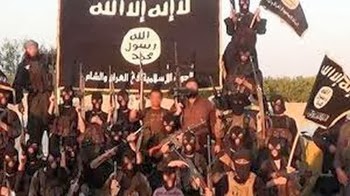
Al-Qaeda takes over in Fallujah, Iraq.
|
Monday, November 18, 2013
The Realignment of the Middle East In Response to the Iranian Threat
The following by Jonathan Spyer is reposted here with permission of the Middle East Forum:
A report this week in the pro-Hizballah newspaper Al-Akhbar claimed that the Turks have expelled a number of Saudi intelligence officers from their soil, because of disputes between the two countries over policy toward Syria and Egypt.
Whatever the veracity of the report (Al-Akhbar can have a vivid imagination), a quote in the article from an un-named Turkish source succeeds in pointing out pithily and concisely the current core strategic dynamic in the Middle East.
The quote is "Turkish officials believe Saudi Arabia, along with Jordan and the United Arab Emirates, are strategically working against the interests of two different regional blocs: Hezbollah, Syria, Iran and Iraq on one front, and Turkey, Qatar, Hamas, and the Muslim Brotherhood on the other."
If Turkish officials do indeed believe this, then they have it right. There are today three discernible de facto alliances operating in the Middle East. Interestingly, for the first time in half a century, none of the major blocs engaged are clearly aligned with the U.S. and the West.
Let's look at these three blocs in a little more detail.
Whatever the veracity of the report (Al-Akhbar can have a vivid imagination), a quote in the article from an un-named Turkish source succeeds in pointing out pithily and concisely the current core strategic dynamic in the Middle East.
The quote is "Turkish officials believe Saudi Arabia, along with Jordan and the United Arab Emirates, are strategically working against the interests of two different regional blocs: Hezbollah, Syria, Iran and Iraq on one front, and Turkey, Qatar, Hamas, and the Muslim Brotherhood on the other."
If Turkish officials do indeed believe this, then they have it right. There are today three discernible de facto alliances operating in the Middle East. Interestingly, for the first time in half a century, none of the major blocs engaged are clearly aligned with the U.S. and the West.
Let's look at these three blocs in a little more detail.
Tuesday, October 22, 2013
MEQ December 2000: Efraim Karsh: Why the Middle East Is So Volatile
The following by Efraim Karsh is reposted here with permission of Middle East Forum:
In the four centuries before World War I, the Middle East was a singularly unchanging place. Since that time, it has been perhaps the most hyperactive of regions. Why this dramatic change? When scholars debate the reasons for twentieth-century volatility, they usually point to outside powers. Efraim Karsh turns this equation on its head; then three leading analysts reply to his argument.
The Editors
Since its formation in the wake of World War I, the contemporary Middle Eastern system based on territorial states has been under sustained assault. In past years, the foremost challenge to this system came from the doctrine of pan-Arabism (or qawmiya ), which sought to "eliminate the traces of Western imperialism" and unify the "Arab nation," and the associated ideology of Greater Syria (or Suriya al-Kubra), which stresses the territorial and historical indivisibility of most of the Fertile Crescent. Today, the leading challenge comes from Islamist notions of a single Muslim community (the umma ). Intellectuals and politicians, denouncing the current system as an artificial creation of Western imperialism at variance with yearnings for regional unity, have repeatedly urged its destruction. National leaders—from Gamal Abdel Nasser to Ayatollah Ruhollah Khomeini to Saddam Husayn—have justified their interference in the affairs of other states by claiming to pursue that unity. Yet the system of territorial states has proven extremely resilient.
Why the Middle East Is So Volatile
by Efraim Karsh
Middle East Quarterly
December 2000, pp. 13-22
Middle East Quarterly
December 2000, pp. 13-22
In the four centuries before World War I, the Middle East was a singularly unchanging place. Since that time, it has been perhaps the most hyperactive of regions. Why this dramatic change? When scholars debate the reasons for twentieth-century volatility, they usually point to outside powers. Efraim Karsh turns this equation on its head; then three leading analysts reply to his argument.
The Editors
 |
| Efraim Karsh |
Thursday, August 22, 2013
Daniel Pipes on Obama's Foreign Policy Fiasco
The followinb by Daniel Pipes is reposted here with permission:
Obama's Foreign Fiasco
by Daniel Pipes
The Washington Times
August 21, 2013
http://www.danielpipes.org/13286/obama-foreign-policy
The Washington Times
August 21, 2013
http://www.danielpipes.org/13286/obama-foreign-policy
It's a privilege to be an American who works on foreign policy, as I have done since the late 1970s, participating in a small way in the grand project of finding my country's place in the world. But now, under Barack Obama, decisions made in Washington have dramatically shrunk in importance. It's unsettling and dismaying. And no longer a privilege.
Thursday, August 15, 2013
David P. Goldman: America's Problems in the Middle East are Just Beginning
The following by David P. Goldman is reposted here with permission of Middle East Forum:
by David P. Goldman
PJ Media
August 15, 2013
http://www.meforum.org/3583/america-problems-middle-east
It's 2015, and there is a Palestinian state in the West Bank and Gaza. The Palestinian branch of the Muslim Brotherhood (Hamas), financed by Iran, wins an election on a platform demanding the expulsion of the Jews from Israel. Iran meanwhile smuggles shoulder-fired anti-aircraft missiles to terrorist cells in Palestine that can take down civilian airlines at Ben-Gurion airport. With backing from the Egyptian military, Fatah throws out the elected Hamas government and kills larger number of Hamas supporters. What will Washington do? Given the track record of both the Obama administration and the Republican mainstream, one would expect America to denounce the use of violence against a democratically-elected government.
Such is the absurdity of both parties' stance towards Egypt: the Egyptian military is doing America's dirty work, suppressing a virulently anti-modern, anti-Semitic and anti-Western Islamist movement whose leader, Mohammed Morsi, famously referred to Israelis as "apes and pigs." It did so with the enthusiastic support of tens of millions of Egyptians who rallied in the streets in support of the military. And the American mainstream reacted with an ideological knee jerk. America's presence in the Middle East has imploded.
America's Problems in the Middle East are Just Beginning
by David P. Goldman
PJ Media
August 15, 2013
http://www.meforum.org/3583/america-problems-middle-east
 |
| David P. Goldman |
Such is the absurdity of both parties' stance towards Egypt: the Egyptian military is doing America's dirty work, suppressing a virulently anti-modern, anti-Semitic and anti-Western Islamist movement whose leader, Mohammed Morsi, famously referred to Israelis as "apes and pigs." It did so with the enthusiastic support of tens of millions of Egyptians who rallied in the streets in support of the military. And the American mainstream reacted with an ideological knee jerk. America's presence in the Middle East has imploded.
Sunday, August 11, 2013
Efraim Karsh On The Truth Behind The Myths Fabricated By and About "Lawrence of Arabia"
The following by Efraim Karsh is reposted here with permission of Middle East Forum:
by Efraim Karsh
The Wall Street Journal
August 9, 2013
http://www.meforum.org/3577/lawrence-of-arabia-fiction
The modern Middle East was born when the European powers exploited the declining Ottoman Empire's entry into World War I to gobble up its lands. They did so by duping naive Arab nationalists to rise against their Ottoman suzerain and then cheated the Arabs of the fruits of their uprising.
So goes the popular narrative about the origins of the region's troubles. It's an emotionally gripping tale, but it's also the inverse of truth. It wasn't British officials but a Meccan potentate, Sharif Hussein ibn Ali of the Hashemite family, who in the summer of 1915 hatched the idea of overthrowing the Ottoman Empire. Impressed by Hussein's promises to raise the Ottomans' Arab subjects in revolt, Sir Arthur Henry McMahon, the British high commissioner in Egypt, tentatively accepted Hussein's vision of an Arab successor empire and facilitated the revolt that began in June 1916.
Hussein never came close to fulfilling his end of the bargain.
Seven Pillars of Fiction
by Efraim Karsh
The Wall Street Journal
August 9, 2013
http://www.meforum.org/3577/lawrence-of-arabia-fiction
|
| Efraim Karsh |
So goes the popular narrative about the origins of the region's troubles. It's an emotionally gripping tale, but it's also the inverse of truth. It wasn't British officials but a Meccan potentate, Sharif Hussein ibn Ali of the Hashemite family, who in the summer of 1915 hatched the idea of overthrowing the Ottoman Empire. Impressed by Hussein's promises to raise the Ottomans' Arab subjects in revolt, Sir Arthur Henry McMahon, the British high commissioner in Egypt, tentatively accepted Hussein's vision of an Arab successor empire and facilitated the revolt that began in June 1916.
Hussein never came close to fulfilling his end of the bargain.
Sunday, June 16, 2013
From MEQ 2004 -- Predictions For The Middle East Till 2020 (How Are They Doing So Far?)
The following is reposted here with permission of Middle East Forum:
The National Intelligence Council (NIC) is the U.S. intelligence community's center for midterm and long-term strategic thinking. Among its other functions, it takes the lead in the production of National Intelligence Estimates— the coordinated judgments of the intelligence community regarding the likely course of future events.
The NIC recently launched a project entitled National Intelligence Council 2020, a year-long discussion among experts on regional affairs, demographics, and technology. The project is an exercise in crystal-ball-gazing toward the year 2020, and is scheduled to produce an unclassified publication in December 2004. Working papers on the various world regions, and on several overarching themes, have already been released by the NIC. The following is an excerpt from the paper dealing with major trends and possible shocks in the Middle East between now and 2020. [1] The NIC's national intelligence officer for the Near East and South Asia is Paul R. Pillar.
—The Editors
Monday, April 15, 2013
Mideast Media Sampler 4/15/13: Some In The Media Are Getting Wise To J Street
by David Gerstman, contributing blogger at Legal Insurrection
1) Bursting the balloon
When I saw the following headline at the Baltimore Jewish Times I was worried, " J Street Carved Out A Place In The U.S.-Israel Advocacy." The article, written by managing editor, Maayan Jaffe starts by faithfully recounting all of J-Streets claims. But, there's more to the title, that suggests that this isn't going to be another J-Street whitewash: "Israelis say Policies Don’t Jibe."
Jaffe first looks at J-Street's math and observes:
1) Bursting the balloon
When I saw the following headline at the Baltimore Jewish Times I was worried, " J Street Carved Out A Place In The U.S.-Israel Advocacy." The article, written by managing editor, Maayan Jaffe starts by faithfully recounting all of J-Streets claims. But, there's more to the title, that suggests that this isn't going to be another J-Street whitewash: "Israelis say Policies Don’t Jibe."
Jaffe first looks at J-Street's math and observes:
Sunday, February 03, 2013
For Many Muslim Countries in The Middle East, Israel Just Isn't Their Number One Concern
In a world where the new Secretary of State believes that he is an expert on the Middle East and that peace between Israel and the Palestinian Arabs is central to peace and stability in the region, Jonathan Kay writes: Welcome to the new Arab world — where no one really cares much about Israel:
When Israel declared independence in 1948, every single one of its Arab neighbours sent in their armies to destroy the Jewish state. The war convulsed the region, as did the many wars that followed. To this day, the received wisdom among bien-penants is that Israel’s very existence is the main destabilizing factor in the Levant.
Monday, January 14, 2013
Liberals Blame Israel For Their Lack Of Support Rather Than Admit They Were Wrong
The following by Barry Rubin is reposted with permission:
By Barry Rubin
There’s been a strange phenomenon building in the last few weeks that's been puzzling me. But I’ve just figured it out. Various people—there are many examples so you can insert your own--have been writing that Israel is making some big mistake. It is losing support, especially liberal and American Jewish support, they explain, because of the way it’s been behaving.
What’s puzzling about this is that nothing has actually happened to imply that any great opportunity is being missed that might justify this attitude. There has been no recent turn toward peace by the Palestinian Authority; no great new idea promising a breakthrough; no change in personalities that offers some shocking new opportunity. The regional picture has been getting worse for reasons having nothing to do with Israel; Hamas stronger; and the Palestinian Authority equally intransigent.
If you claim the right to determine Israel's fate and put its people's lives at risks you might be expected to go to the trouble of doing a little research and serious thought on these matters.
Barry Rubin
Mystery Solved: Why Are Some Liberals Claiming Israel is At Fault For Their Lack of Support?
By Barry Rubin
There’s been a strange phenomenon building in the last few weeks that's been puzzling me. But I’ve just figured it out. Various people—there are many examples so you can insert your own--have been writing that Israel is making some big mistake. It is losing support, especially liberal and American Jewish support, they explain, because of the way it’s been behaving.
What’s puzzling about this is that nothing has actually happened to imply that any great opportunity is being missed that might justify this attitude. There has been no recent turn toward peace by the Palestinian Authority; no great new idea promising a breakthrough; no change in personalities that offers some shocking new opportunity. The regional picture has been getting worse for reasons having nothing to do with Israel; Hamas stronger; and the Palestinian Authority equally intransigent.
Thursday, October 18, 2012
The Other War In Egypt, Libya, Iraq and Syria: Preserving The Records of the Regimes
The following by Alex Joffe is reposted here with permission:
Preserving the Syrian Paper Trail
When the regime of Bashar al-Assad is destroyed or pushed out of Damascus, it will leave behind a wrecked capital and unparalleled record of supporting terrorist groups and covert deals with Russia, Iran and North Korea. What we understand of that record will be shaped by the documents that are preserved and analyzed. What Syrians will understand about forty years of rule by the fascist Baath party and its crimes against the Syrian people also depends on preserving something vital yet almost out of sight: the regime's archives and files.
Thursday, August 04, 2011
A Strategy for Israel in the Changed Middle East
The following is a summary of the article A Strategy for Israel in the Changed Middle East, written by Efraim Halevy--former head of the Mossad from 1998 to 2002.
A Strategy for Israel in the Changed Middle East
Efraim Halevy
- The options for Israel and the Palestinians basically can be boiled down to these: a permanent agreement, an interim agreement, a de facto interim agreement, and a situation of no agreement. The best possible option - a permanent agreement - is not operable at this time and is the least probable.
Mideast Media Sampler 08/04/2011
From DG:
1) The only hate
This week the New York Times reported on a poll of Muslims in America, Muslims Are Loyal to U.S. And Hopeful, Poll Finds. After establishing:
“The prejudice and discrimination are definitely there, and that’s something we have consistently seen in the data,” Mr. Younis said. “But at the same time many of the people in the Muslim-American community seem to be doing relatively well, and part of their doing well is being able to be full-fledged Americans, to participate in the American experience.”the final three paragraphs read
Among the most intriguing findings: two-thirds of American Muslims say they identify strongly with the United States, about the same percentage as those who say they identify strongly with their religion. But other religious groups identified far more than Muslims with the United States. Protestants, Catholics and Jews said they identified with the United States far more strongly than they identified with their respective faiths.Almost half of Muslim Americans said that they had experienced religious or racial discrimination in the last year. That was far more than the members of any other religious group. About one-third of Mormons said they had experienced discrimination in the last year, putting them second in that category after Muslims. About one-fifth of Jews, Catholics and Protestants said they had experienced prejudice.I find it interesting that the self-perception of Muslims is treated unchallenged as news. There are two contrasts.
On many key questions in the poll, it was American Jews whose answers most resembled those of Muslims. Jews were the most likely of any religious group besides Muslims to say that Muslims are loyal Americans, and that the war in Iraq was a mistake. Jews were just as likely as Muslims to say that American Muslims face prejudice.
Wednesday, August 03, 2011
Mideast Media Sampler 08/03/2011
From DG:
1) AIPAC or State?
The story's been reported for little more than a day now. Here's the version in the New York Daily News:
Israel signaled Tuesday it is ready to show some "flexibility" in its border stalemate with the Palestinians, prompting hope that Middle East peace talks can be revived.
Up until now, Israeli Prime Minister Benjamin Netanyahu has staunchly opposed a proposal by President Obama that boundaries for a future Palestine be based on the pre-1967 Mideast war lines.
But Tuesday, an Israeli official told The Associated Press that Netanyahu is "willing to show some flexibility" on the border issue.Had PM Netanyahu really changed his mind, after vehemently disagreeing with President Obama's formulation about peace being based on the 1967 border?
Tuesday, August 02, 2011
Mideast Media Sampler 08/02/2011
From DG:
1) The wages of hesitation
The Washington Post has another strong editorial about Syria, Syria's Ramadan Massacre.
It's not the main thrust of the editorial, but this observation was interesting:
The attack reflects Mr. Assad’s desperation; the regime appears to see no way to save itself other than by waging war on the civilian population. But Mr. Assad clearly is also calculating that those who suppose that dictators can no longer get away with massacres are wrong. He has some basis for that conclusion: NATO may have intervened in Libya to prevent the slaughter of civilians by Moammar Gaddafi, but Western leaders have publicly and vehemently ruled out intervention in Libya. The U.N. Security Council has failed to speak out against Mr. Assad’s assaults on other cities, as has the Arab League.
Subscribe to:
Posts (Atom)