Showing posts with label Armenian Genocide. Show all posts

Tuesday, January 29, 2013

Defining Genocide: Does The Turkish Massacre of Armenians Apply?

The following by Michael M. Gunter is reposted here with permission of Middle East Forum

Contrast with

What Is Genocide? The Armenian Case
Turkey, Past and Future

by Michael M. Gunter
Middle East Quarterly
Winter 2013, pp. 37-46 (view PDF)


Shortly after the World War II, genocide was legally defined by the U.N. Genocide Convention as "any... acts committed with intent to destroy, in whole or in part, a national, ethnical, racial or religious group, as such."[1] The key word from the perspective of this article is "intent." For while nobody can deny the disaster wrought on the Armenians by the 1915 deportations and massacres, the question is whether or not it can be defined as genocide—arguably the most heinous crime imaginable.

The Ambiguity of Genocide
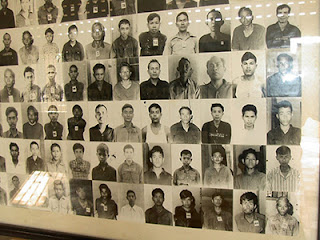
Pictures of the Cambodians murdered by the Khmer Rouge
The liberal use of the term "genocide" has stirred numerous controversies and debates. Despite an international law definition, the word has been applied in some questionable instances. The deliberate murder of more than a million Cambodians by the Khmer Rouge, some of whose victims are pictured here, was undoubtedly a horrific crime, but does it fit the definition of genocide?
The strict international law definition of genocide has not prevented its application to virtually every conflict involving a large number of civilian deaths from the Athenian massacre of the inhabitants of Milos in 416 B.C.E., to the Mongol sacking of Baghdad in 1258, to the fate of the native North American Indians, to Stalin's induced famine in the Ukraine in the early 1930s, to the recent conflicts in Bosnia, Burundi, Chechnya, Colombia, Guatemala, Iraq, Sudan, and Rwanda, which is not to deny that some of these cases do indeed qualify as genocide.


The liberal use of the term has naturally stirred numerous controversies and debates. Israel Charny offers little help by arguing that any massacre constitutes genocide, even the 1986 Chernobyl nuclear meltdown.[2] At the other end of the spectrum, Stephen Katz views the Holocaust as the only true genocide in history.[3] In between these two polar definitions, Ton Zwaan has attempted to distinguish between "total" and "complete" genocide and "partial" genocides.[4]

Thursday, January 24, 2013

Was Hitler Inspired By Turkey's Armenian Genocide?

The following by Hannibal Travis is reposted with permission of Middle East Forum

Did the Armenian Genocide Inspire Hitler?
Turkey, Past and Future

by Hannibal Travis
Middle East Quarterly
Winter 2013, pp. 27-35 (view PDF)


It is well known by genocide scholars that in 1939 Adolf Hitler urged his generals to exterminate members of the Polish race.[1] "Who speaks today of the extermination of the Armenians?" Hitler asked, just a week before the September 1, 1939 invasion of Poland.[2] However, while it is generally agreed that Hitler was well aware of the Armenian genocide,[3] some genocide scholars and historians of the Ottoman Empire have questioned whether he actually made the above statement or even intended to exterminate portions of the "Polish race."[4]

Still, there is evidence that the massacre of the Ottoman Armenians helped persuade the Nazis that national minorities posed a threat to empires dominated by an ethnic group such as the Germans or the Turks.

Thursday, January 10, 2013

Turkey's Unacknowledged Genocide Of Armenia

The following by Efraim Karsh is reposted here with the permission of Middle East Forum:

Ankara's Unacknowledged Genocide
Turkey, Past and Future

by Efraim Karsh
Middle East Quarterly
Winter 2013, pp. 17-26 (view PDF)

It is commonplace among Middle East scholars across the political spectrum to idealize the Ottoman colonial legacy as a shining example of tolerance. "The multi-ethnic Ottoman Turkish Empire," wrote American journalist Robert Kaplan, "was more hospitable to minorities than the uni-ethnic democratic states that immediately succeeded it … Violent discussions over what group got to control which territory emerged only when the empire came to an end, after World War I."[1]


The ethnic cleansing of Turkish Armenia was accomplished in a variety of ways including deportations and outright massacres. Here, Armenian deportees struggle to survive in makeshift tents erected in the Syrian desert to which they were deported in 1915.
Bernard Lewis went a significant step further, ascribing the wholesale violence attending the collapse of the Ottoman Empire to attempts to reform its Islamic sociopolitical order. "The classical Ottoman Empire enabled a multiplicity of religious and ethnic groups to live side by side in mutual tolerance and respect, subject only to the primacy of Islam and the supremacy of the Muslims," he wrote. "The liberal reformers and revolutionaries who abolished the old order and proclaimed the constitutional equality of all Ottoman citizens led the Ottoman Empire into the final bitter and bloody national struggles—the worst by far in the half-millennium of its history."[2]And Edward Said, in an exceptional display of unanimity with his intellectual foe, was similarly effusive. "What they had then seems a lot more humane than what we have now," he argued. "Of course, there were inequities. But they lived without this ridiculous notion that every millet has to have its own state."[3]

Even Elie Kedourie, whose view of Ottoman colonialism was far less sentimental, could see some advantages in the empire's less than perfect sociopolitical order: "Ottoman administration was certainly corrupt and arbitrary, but it was ramshackle and inefficient and left many interstices by which the subject could hope to escape its terrors, and bribery was a traditional and recognized method of mitigating severities and easing difficulties."[4]

While there is no denying the argument's widespread appeal, there is also no way around the fact that, in almost every particular, it is demonstratively wrong.

Monday, August 08, 2011

Video: Talking Turkey About Armenian Genocide, Kurdish Ethnic Cleansing And Occupation Of Northern Cyprus

While Turkey is beginning to establish a place for itself in both the Middle East and in connection with the West, there are 3 issues that remain unresolved:

  • The Armenian Genocide
  • The Kurdish ethnic cleansing
  • The occupation of Northern Cyprus

Go to the Free Middle East website's Turkish Human Rights Violations page to help take action or check out their Facebook page.

Here is the video: